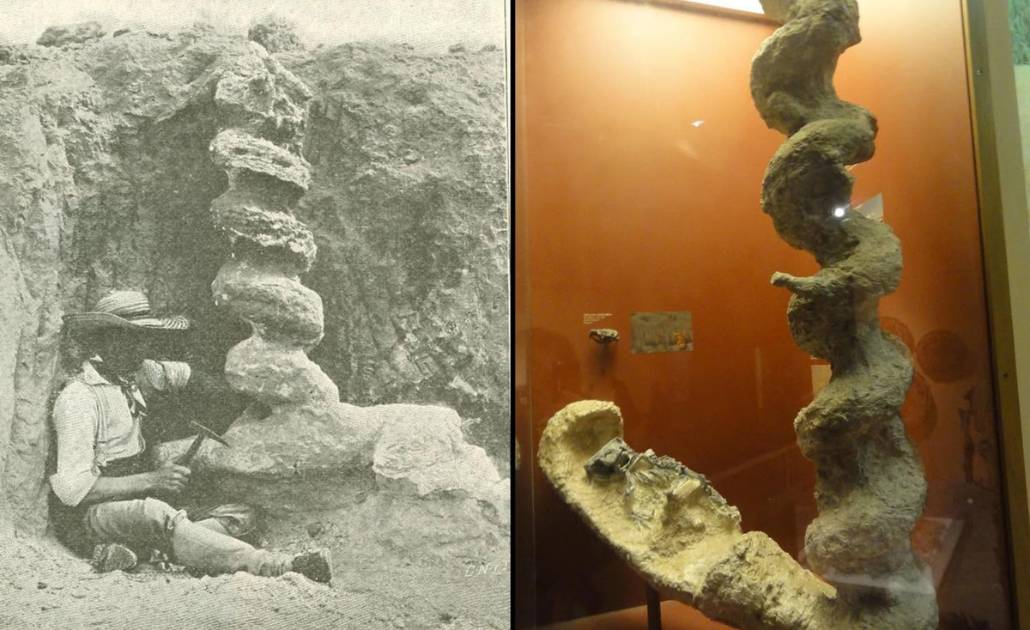
In the 1890s, ranchers in the Nebraska badlands stumbled upon something truly bizarre: enormous, perfect spiral fossils twisting deep into the ground. They looked less like natural formations and more like giant, intentional screws driven into the earth.
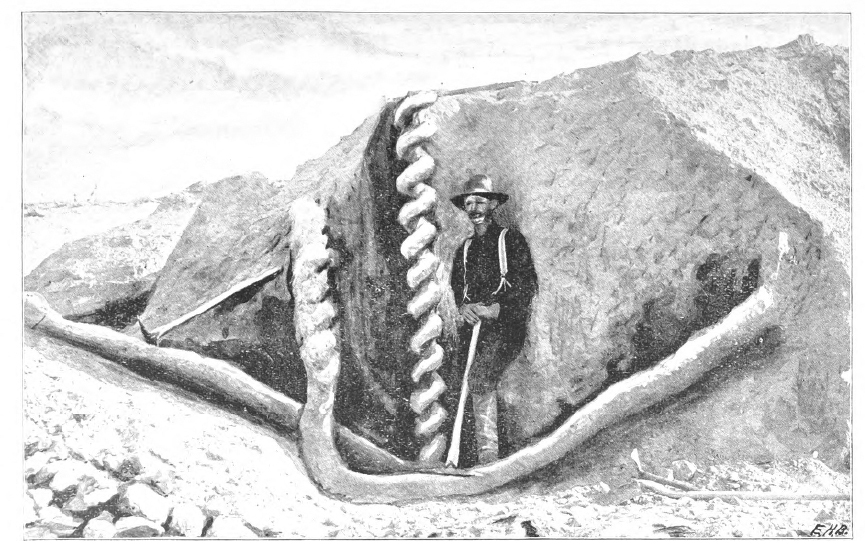 For years, these strange structures left the scientific community completely baffled, sparking an intense debate about their origin.
The Great Scientific Debate
When first discovered, no one could agree on what these spirals actually were. The formations were so precise and unnatural-looking that they defied easy explanation.
-
The Plant Theory: Some scientists were convinced they were the fossilized remains of giant, prehistoric plants or unknown root systems.
-
The Sea Sponge Theory: Others argued that the area must have once been underwater, claiming the spirals were ancient marine sponges frozen in time.
The truth, however, turned out to be far stranger than anyone had imagined.
Unmasking the “Devil’s Corkscrews”
Eventually named Daemonelix—literally translating to “Devil’s Corkscrews”—these formations were neither plants nor sponges. They were actually 20-million-year-old fossilized burrows.
Even more shocking was the creature responsible for them: an extinct, land-dwelling beaver called Paleocastor.
A Different Kind of Beaver: Unlike modern beavers that cut down trees and build wooden dams, Paleocastor lived entirely on land and excelled at subterranean engineering.
Giant Drills Frozen in Stone
To protect themselves from predators and harsh weather, these prehistoric beavers used their specialized front teeth to scoop out massive, helical tunnels into the earth. Some of these corkscrew homes reached over 7 feet deep. Over millions of years, these empty tunnels filled with mineral-rich soil and fossilized, preserving the perfect spiral shape.
Even today, standing in the Nebraska badlands and looking at these massive spirals, the sight is uncanny. They look like giant, industrial drills frozen in stone—a stunning reminder that sometimes, nature’s most bizarre creations are built by the most unexpected architects.