WASHINGTON, D.C. — When an individual holding one of the highest security clearances in the United States military—trusted by the National Security Agency (NSA) to handle photographs withheld from most high-ranking generals—swears under penalty of law that he witnessed artificial structures on the moon, the narrative of a dead, gray, lifeless rock begins to fracture.
This is not an anonymous internet rumor. This is the documented testimony of Karl Wolf, a former U.S. Air Force airman trained in precision electronics and photographic systems. Stationed at Langley Air Force Base in Virginia during the mid-1960s, Wolf worked within the classified orbit of the NSA, handling highly sensitive intelligence imagery.
For decades, Wolf maintained strict silence, bound by his military oath. It was not until 2001, at the National Press Club in Washington, D.C., that he went on the record alongside more than 20 military and intelligence whistleblowers. He signed a formal statement, offered to testify before Congress under oath, and repeated his exact account without variation for 16 years until his death.
According to Wolf’s testimony, his exposure to the anomaly occurred by accident in 1965 when he was called to repair malfunctioning image-processing equipment at a secure facility. The facility was handling data from NASA’s Lunar Orbiter program, a initiative officially tasked with mapping the lunar surface to find safe landing sites for the Apollo missions.
While inside the laboratory, another technician confided in him, stating, “We’ve discovered a base on the backside of the moon.” Wolf was then shown photographic prints assembled from orbiter data. On the far side of the moon—the side permanently turned away from Earth—Wolf observed massive structures featuring distinct geometric shapes, sharp angles, and hard edges inconsistent with natural formations.
“I saw geometric shapes that you wouldn’t expect to see,” Wolf stated. “There were towers. There were spherical buildings. There were structures that looked like radar dishes, very tall ones. Some of these objects were half a mile in size.”
Wolf recalled the palpable fear in the room. In 1965, neither the United States nor the Soviet Union possessed the technology to construct a lunar base. The revelation carried severe national security implications. Wolf was strictly warned that the information did not exist, and that breaking silence would carry ultimate consequences.
Skeptics have long dismissed Wolf’s claims, attributing his observations to pareidolia—the human tendency to perceive meaningful patterns in random images—or suggesting he mistook film artifacts, dust, or processing glitches on low-resolution, grainy 1960s film for physical structures. Critics also point out that the physical photographs Wolf described have never been produced.
However, defenders of Wolf’s credibility emphasize his professional background as a trained precision photographic specialist whose specific job was to differentiate between film flaws and genuine imagery. Furthermore, the severe threats of legal and personal retaliation he reported face-to-face contrast sharply with the theory that the incident was merely workplace humor.
Wolf’s testimony does not exist in a vacuum. It aligns with a broader framework of anomalies that have fueled skepticism regarding official lunar history for over half a century. Apollo 14 astronaut Edgar Mitchell, the sixth man to walk on the moon, spent his post-NASA years publicly asserting that intelligent extraterrestrial life had visited Earth and that government entities had covered up the evidence.
Additionally, researchers have questioned the abrupt cessation of the Apollo program. Following Apollo 17 in 1972, humanity abandoned crewed lunar exploration for over 50 years, despite having established the necessary infrastructure. While official channels cite cost and shifting public interest, alternative theories suggest space agencies were deterred from returning.
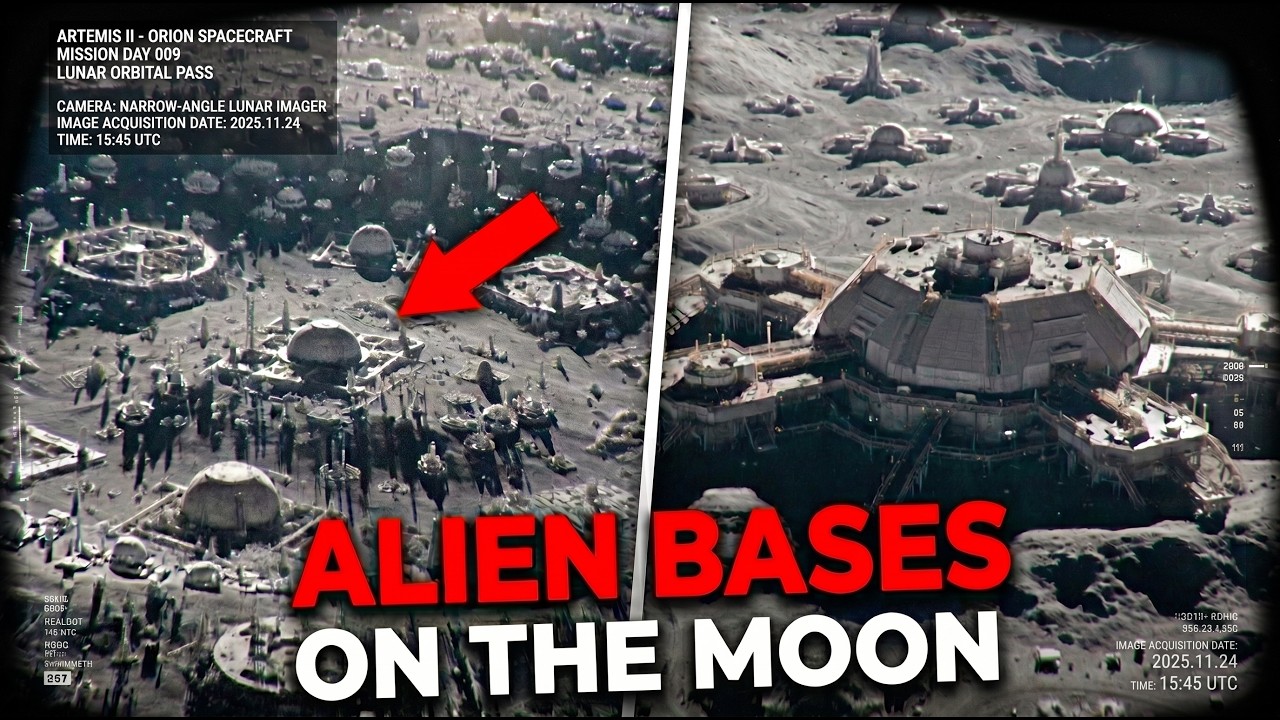
The historical mystery has gained renewed urgency with the advent of the Artemis program, NASA’s modern initiative to return humans to the moon. Artemis 2, the first crewed flight to loop around the far side of the moon in over half a century, features advanced, ultra-high-resolution digital imaging systems far superior to the film labs of the 1960s.
Reports have emerged indicating that the United States Space Force—a military branch established to protect American interests in the space domain—swiftly placed a classification order on a specific photograph captured during the Artemis 2 trajectory over the far side of the moon.
By law, NASA operates as a civilian agency intended to share its scientific findings with the public. For a military branch to intervene and classify a specific frame from a civilian science mission requires the imagery to cross from scientific data into the realm of vital national security.
If the moon is entirely barren, an unedited photograph of its surface would pose no threat to national security. The immediate military classification of a modern lunar image suggests the camera captured something the public was never intended to see—potentially confirming the exact geometric anomalies Karl Wolf reported nearly 60 years ago.