Extreme weather events and rising seas are placing the world’s most precious heritage sites directly in harm’s way.
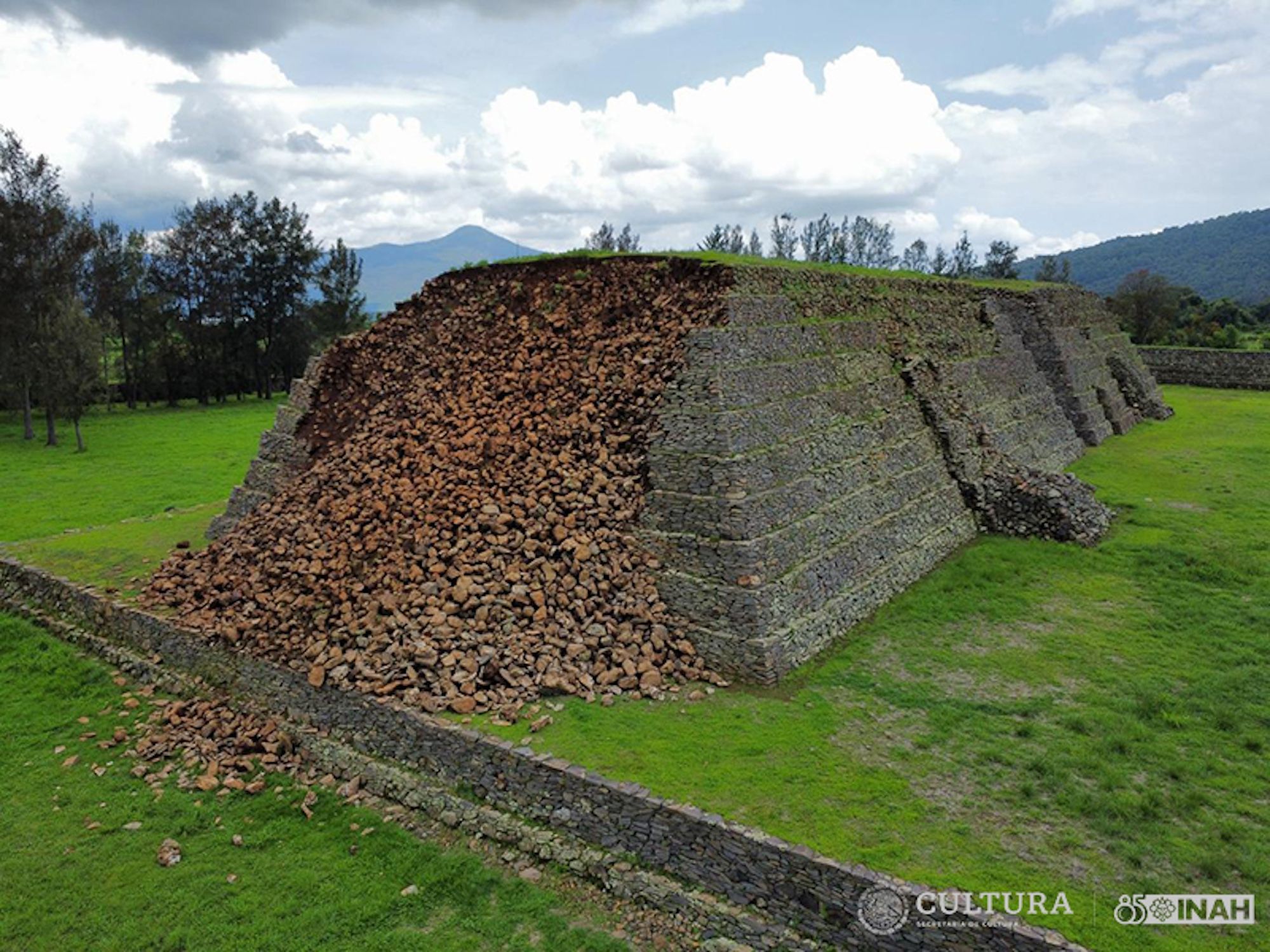
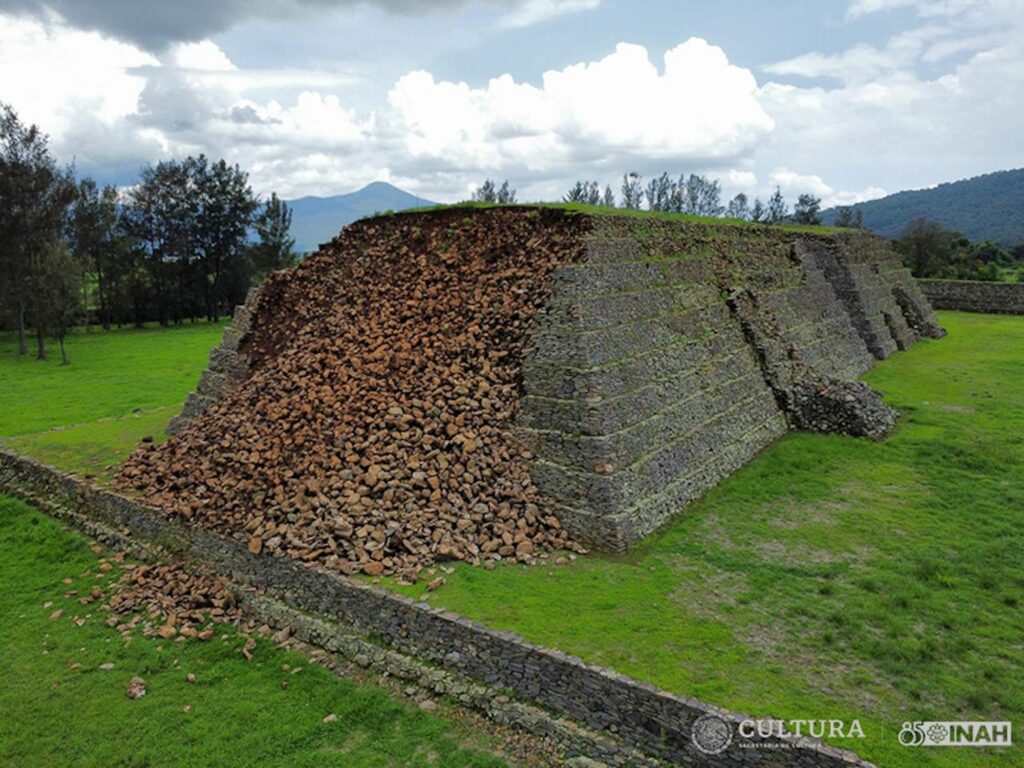
A striking example of this crisis unfolded in 2024, when an ancient stone pyramid in Mexico succumbed to an increasingly chaotic global climate. On the night of July 29, the 15-meter-high (roughly 50-foot) square monument located in the state of Michoacán suddenly collapsed under the pressure of relentless rain, leaving its south wall reduced to a pile of rubble.
 A Legacy Untouched by the Aztecs, Broken by the Weather
The pyramid was once among the best-preserved monuments of the Michoacán Kingdom civilization. It sits within Ihuatzio, a remarkably intact archaeological site that also features a second pyramid, a fortress tower, and sacred tombs.
1,100 Years Ago: The site was first settled by Indigenous Nahuatl-speaking groups.
The P’urhépecha Era: It later became the stronghold of the P’urhépechas—the only empire the Aztecs notoriously failed to conquer. This vibrant culture still thrives today.
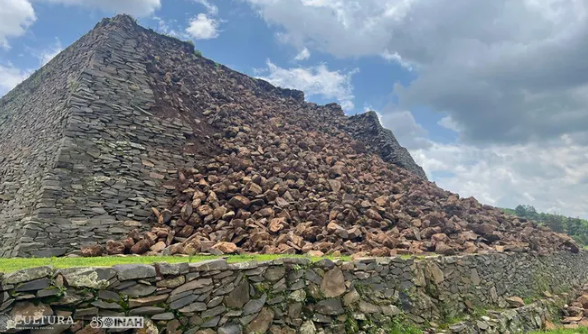 While only one of the site’s pyramids suffered structural failure, officials from Mexico’s National Institute of Anthropology and History (INAH) reported extensive damage. At least six of the monument’s “stepped sections”—including the outer wall, the core, and the retaining structure—are now in severe disrepair.
From Severe Drought to Sudden Deluge
Archaeologists directly blame the disaster on a brutal cycle of extreme weather. In July 2024, at the peak of the Northern Hemisphere summer, intense thunderstorms and heavy rainfall battered much of Mexico. However, the real damage was done before the rains arrived.
Mexico had just endured its worst drought in 30 years, an environmental crisis so severe that it caused multiple lakes to dry up completely.
“The high temperatures previously recorded in the area, and the consequent drought, caused deep cracks that allowed rainwater to filter into the interior of the pre-Hispanic building,” INAH explained in an official statement.
With water seeping deep into the cracked core, the collapse became all but inevitable. Officials have now shifted their focus toward repairing the structure to protect what they call a vital piece of “the cultural heritage of Mexicans.”
A Global Threat to Human History
While archaeologists exist to study human behavior of the past, their work is increasingly dictated by human behavior in the present. Driven by human-caused climate change, extreme weather and rising sea levels are becoming an existential threat to ancient cultural sites worldwide.
Oceania: Scientists recently discovered that ancient cave paintings are deteriorating at an accelerated rate due to shifting climate patterns.
Europe & Mexico: A study published last year on historic building materials confirmed that sharp increases in precipitation put ancient structures at extreme risk of structural failure.
A “Bad Omen” for the Modern World
For the descendants of those who built Ihuatzio, the event carries a heavy spiritual weight. Tariakuiri Alvarez, a living member of the P’urhépecha tribe, shared that his ancestors would have interpreted the crumbling pyramid as a “bad omen.” In a Facebook post, Alvarez noted that a similar structural collapse occurred just before foreign conquerors arrived in Mexico, signaling that the gods were “displeased.”
The tragedy at Ihuatzio is not an isolated incident. Just days before the Mexican pyramid fell, Utah’s iconic “Double Arch” geological formation also caved in, likely triggered by changing water levels and erosion.
These heritage sites are priceless touchstones of human history that we hope to preserve for future generations. Watching them disintegrate under a climate drastically altered by modern human activity is deeply unsettling—and you don’t have to be an ancient god to find it distressing.