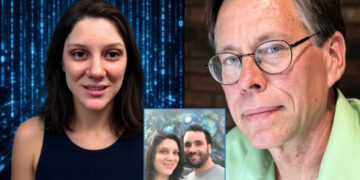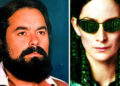

American researcher Amy Eskridge claimed she had discovered what Bob Lazar got fundamentally wrong about UFO propulsion, and that the discovery had placed her on a “kill list.” Just weeks later, she was dead. Four years after her death, her disturbing private messages resurfaced during an episode of The Joe Rogan Experience, where her claims about Element 115, surveillance, and alleged threats became the subject of discussion.
On November 19, 2026, Joe Rogan and his guest, YouTuber Bob Gymlan, discussed Eskridge’s case during episode #2583 of the podcast. The conversation examined messages she reportedly sent in May 2022 to Samuel Reid, CEO of Geometric Energy Corporation and a longtime associate. Reid had made screenshots of their correspondence public in April 2026.
According to the messages, Eskridge had been reconsidering the propulsion system described by Bob Lazar after watching Jeremy Corbell’s documentary about his alleged experiences at Area 51. She believed that a theory she had developed over the previous year explained something Lazar had misunderstood about the operation of the supposed extraterrestrial spacecraft.
She wrote that her “ether theory” showed that everything Lazar said, “in a technical sense,” was “exactly 100% backwards.”
Eskridge claimed she had figured out the actual role of Element 115, the mysterious substance Lazar has long claimed was involved in powering extraterrestrial vehicles. She reportedly recorded a voice note about her discovery while driving home and subsequently became convinced that somebody had intercepted the recording.
One message stated, “I got myself on a kill list.” Another contained the disturbing declaration, “I did not kill myself.”
She claimed she had been receiving threats and believed her communications were being monitored. Eskridge also mentioned consulting a man named Bill and a retired general with whom she said she had worked. According to her account, both believed the threats were not coming directly from a government agency.
Instead, she suspected a wealthy private organization had hired individuals to intimidate her. She compared the alleged operation to an American version of Russia’s Wagner Group, a private military organization associated with mercenary operations.
These were Eskridge’s allegations, not independently established findings. The messages do not identify an organization responsible for threatening her or demonstrate that her proposed discovery had attracted hostile attention.
During the Rogan podcast, the discussion also explored reports that Reid had experienced something similar to the directed-energy harassment Eskridge described. Their correspondence suggested that they had compared their experiences, although no independent evidence was presented to establish what had happened to Reid.
Reid’s company had also announced plans for DOGE-1, a lunar payload associated with a SpaceX launch. During the conversation, the connection briefly created confusion about Elon Musk’s involvement, but it was clarified that the alleged directed-energy experience concerned Reid, not Musk.
Rogan appeared particularly interested in the possibility that a revolutionary propulsion system could threaten powerful economic interests. He suggested that technology capable of transforming energy production or transportation might attract opposition from people whose financial interests depended on existing systems.
Gymlan raised a similar argument, suggesting that such technology could disrupt the global petroleum economy. Neither established that Eskridge had discovered a working propulsion system or that an energy company, defense contractor, or private organization had attempted to suppress her research.
She reportedly believed an invisible beam had been used against her while she worked at a computer. According to Gymlan, she claimed the technology could determine what she was typing even when the computer was disconnected from a network.
Eskridge also alleged that the attacks had caused physical injuries to her hands. Photographs discussed during the podcast showed marks she attributed to the supposed exposure.
Another unusual detail concerned window blinds at a friend’s property where she claimed an attack had occurred. Eskridge apparently believed the blinds had been damaged by the same energy source.
The photographs prompted disagreement about whether the blinds actually appeared melted. Rogan considered whether ordinary sunlight or another explanation might account for some of the marks, while Gymlan interpreted the images differently.
Earlier in the episode, Gymlan acknowledged that some observers had suggested medications could potentially produce similar-looking skin problems. He did not establish that medication caused Eskridge’s injuries, but the discussion demonstrated how the photographs could support competing interpretations without proving what had happened.
Gymlan discussed allegations that Eskridge had been followed in public and drugged while visiting bars. He suggested that deliberate harassment could make someone appear psychologically unstable to outsiders. However, the podcast did not establish that such a campaign had occurred.
Eskridge discussed a strange theory involving two groups of future humans called P-47 and P-52, supposedly from 47,000 and 52,000 years ahead. According to the story, a catastrophe would force some humans underground while others survived on the surface. Over thousands of years, they would evolve differently, possibly becoming the mysterious beings described in UFO encounters.
She was born on September 19, 1987, in Huntsville, Alabama, a city closely associated with NASA’s Marshall Space Flight Center, Redstone Arsenal, and the American aerospace industry.
Her father, Richard Eskridge, was a retired NASA engineer who shared her interest in experimental propulsion. She graduated from the University of Alabama in Huntsville with a background in chemistry and biology and later pursued studies in materials science.
Her original presentation examined unconventional experiments involving electricity, superconductors, electromagnetism, and gravity modification. Among the researchers she discussed were Thomas Townsend Brown, Ning Li, Eugene Podkletnov, and Claude Poher.
Several had investigated unusual physical effects that some believed could eventually contribute to new propulsion systems. However, the experiments discussed in her presentation had not established a generally accepted, reproducible method for controlling gravity.
Eskridge was particularly interested in physicist Ning Li, whose theoretical work during the 1990s explored possible relationships between superconductors and gravitational effects.
Li later founded AC Gravity LLC and received a Defense Department research contract. For years, her limited public visibility contributed to rumors that she had mysteriously disappeared. In reality, Li remained in Alabama and died in July 2021.
Eskridge believed the history of unconventional propulsion contained examples of promising experiments that had been neglected or disappeared from public discussion after attracting institutional interest.
By 2020, she was expressing much stronger opinions about the possible suppression of advanced technology. During a lengthy interview with Jeremy Rys, also known as AlienScientist, and experimental propulsion researcher Mark Sokol, she described efforts to develop a new understanding of gravity and discussed what she called “gravity chemistry.”
Her idea was that manipulating gravity or another fundamental physical interaction might allow researchers to influence chemical reactions in ways conventional chemistry could not. She imagined breaking molecular bonds under comparatively mild conditions without the enormous energy normally required for certain industrial processes.
Eskridge explained that her father was primarily interested in propulsion, whereas her chemistry background led her to consider different applications for the hypothetical technology.
Although she spoke confidently about these ideas, the interview did not demonstrate a functioning device or provide experimental results establishing that gravity could be manipulated to control chemical bonds.
Eskridge said several individuals identifying themselves as participants in a secret space program had approached her with a strange message. They allegedly thanked her for inventing an advanced medical device called a “3D holographic medpod,” even though she insisted that she had never built such a machine.
She said approximately three to five people had independently made similar statements. What confused her was that she had already thought about how such a device might theoretically be developed, but could not understand why strangers were crediting her with a completed invention.
Another part of that interview involved physicist Hal Puthoff, who has been associated with research into remote viewing, unconventional physics, and government-related investigations of unidentified aerial phenomena.
Eskridge claimed Puthoff had visited her family’s home in Huntsville several times through a connection involving an investor working with her father. During one visit, she said they discussed the concept of ultraterrestrials, beings that might originate from Earth rather than another planet.
On the same episode, Rogan questioned whether withholding information necessarily made somebody a bad person. He recalled having met Puthoff and described him as interesting, while explaining that he preferred to listen to extraordinary claims without automatically accepting them as facts.
The podcast did not establish that Puthoff had concealed information from Eskridge or that he had any involvement in the alleged threats against her.
Another important connection concerns the surveillance fears she had expressed long before the messages involving Element 115.
In her 2020 conversation with Rys and Sokol, Eskridge described incidents that she interpreted as deliberate harassment. She claimed somebody had entered an apartment she previously shared with a boyfriend, interfered with electrical equipment, and moved personal belongings.
She recalled finding a USB charging cable cut in half and described a Lexus that allegedly appeared repeatedly near her residence with changing license plates. Eskridge believed these incidents were intended to intimidate her and suggested that certain people were attempting to obtain information about her research.
These accounts were recorded approximately two years before the May 2022 messages. They show that her surveillance concerns did not begin with her later interpretation of Bob Lazar’s propulsion theory.
The November Rogan discussion also connected Eskridge’s allegations with Havana syndrome. Journalist Catherine Herridge reported on unexplained health incidents involving American government personnel. Some affected individuals have reported headaches, dizziness, cognitive problems, and other symptoms, leading to investigations into whether directed-energy or radiofrequency technology could be involved.
A March 2024 investigation by the National Institutes of Health found that affected participants experienced serious symptoms but did not show significant evidence of MRI-detectable brain injuries or consistent biological abnormalities compared with control groups.
Those findings did not resolve every question surrounding the incidents. They also provided no evidence that Eskridge had been attacked with such technology.
Eskridge separately discussed alleged directed-energy attacks with Franc Milburn, a former British military intelligence officer.
In an April 2026 interview with NewsNation, Milburn said Eskridge had contacted him about her fears and provided photographs of marks she believed were caused by a directed-energy weapon.
He also described messages in which she warned him not to believe reports that she had taken her own life. Milburn said he spoke with her shortly before her death and believed she had been subjected to a campaign intended to prevent her from continuing her research.
His account provided further evidence that Eskridge had communicated these fears to other people. It did not independently establish that the alleged attacks occurred.
Rogan described his understanding of Lazar’s account: a generator containing a triangular piece of Element 115, which would supposedly be bombarded with radiation to produce a gravitational effect.
According to the explanation Rogan recounted, the spacecraft would not operate like a conventional rocket that pushes against expelled fuel. Instead, the alleged system would manipulate gravity and spacetime, allowing the vehicle to move in extraordinary ways.
Rogan also discussed Lazar’s claim that the craft possessed different propulsion arrangements, including one for relatively slow movement and another supposedly capable of enormous jumps through space.
He recalled Lazar claiming that one of these systems had been physically removed from a spacecraft because it presented problems. Rogan then tried to understand what Eskridge could have meant by saying Lazar’s technical explanation was backward.
If Lazar believed Element 115 was placed inside a generator and subjected to radiation to produce a gravitational effect, was Eskridge suggesting that the mechanism worked in the reverse direction? Was she proposing that the material responded to gravity rather than generating it, or that another interaction was responsible?
These possibilities were not answers provided by Eskridge. Rogan was attempting to interpret her statement, and he acknowledged that he did not know exactly what she meant. Gymlan admitted the same uncertainty.
The replica in Rogan’s possession was a representation of Lazar’s claimed apparatus, not independent evidence that such a propulsion system existed.
The uncertainty matters because Element 115 is a real chemical element, but its established properties are very different from the extraordinary abilities attributed to it in Lazar’s story. Scientists first synthesized atoms of Element 115 in the early 2000s. In November 2016, the International Union of Pure and Applied Chemistry formally approved the name moscovium.
The isotopes produced in laboratories are highly radioactive and decay rapidly. No stable isotope capable of powering spacecraft or generating controllable gravity has been demonstrated. The discovery of moscovium therefore does not validate Lazar’s claims about extraterrestrial propulsion.
Eskridge’s “ether theory” presents a different problem. Although the term ether has a long history in physics, classical theories of a light-carrying medium were displaced by modern developments such as special relativity.
The publicly discussed messages do not contain a complete mathematical account of her theory, an engineering design, or experimental results showing how it could explain the alleged craft.
Without those details, there is no reliable way to determine whether her interpretation represented a testable scientific hypothesis or how it differed technically from Lazar’s account.
Eskridge died in Huntsville on June 11, 2022, at age 34. Her death was ruled a suicide. Her father, Richard Eskridge, publicly rejected suggestions that her death was suspicious when the case attracted renewed attention in April 2026. Family members also challenged attempts to connect her death to conspiracy theories about missing scientists.
In April 2026, Eskridge’s name also became associated with a wider controversy involving American scientists who had died or disappeared. On April 20, House Oversight Committee Chairman James Comer and Congressman Eric Burlison requested information from federal agencies concerning researchers connected to sensitive nuclear, aerospace, and defense-related work.
The congressional inquiry followed reports about several missing or deceased scientists, including individuals associated with NASA’s Jet Propulsion Laboratory and other research organizations.
However, the published committee request did not establish that the cases were connected. It focused on reports involving incidents beginning in 2023 and did not announce that Eskridge’s death was being reinvestigated as a homicide.
An April 22, 2026 investigation by Ars Technica also documented objections from families who rejected attempts to connect unrelated deaths and disappearances.
For all the attention surrounding her final messages, the unanswered scientific question is remarkably specific. What did she think Element 115 actually did inside the alleged spacecraft, and where is the research that would allow anyone else to test her conclusion?