
UFO whistleblowers face growing threats, harassment, and systemic intimidation as they come forward to expose what they believe are some of America’s most closely guarded secrets.
Investigative journalist Jeremy Corbell, who has brought multiple whistleblowers before Congress, warned that the risks extend far beyond public scrutiny. In statements detailing several cases featured in his upcoming film Sleeping Dog, Corbell emphasized that these individuals are sacrificing their security clearances, personal safety, and families’ well-being simply by coming forward.
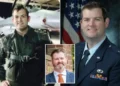
One central case in the film involves Air Force veteran Dylan Borland, who testified before Congress in 2025 about a 2012 encounter near Langley Air Force Base in Virginia. Borland described seeing a silent, 100-foot metallic black triangular craft with a “gold lava plasma-like fluid” moving across its surface before accelerating instantly to commercial jet altitude. He noted unusual physical effects, including an overheating phone, ambient static electricity, and a thunderstorm-like odor. During the encounter, Borland said he and others were subjected to disturbing actions intended to silence them.
Following his testimony, Borland reported an escalation in harassment targeting himself, his family, friends, and former coworkers. He alleged that factions within the U.S. government generated false documents and intelligence products under his name to discredit him. Furthermore, after presenting classified and unclassified documents, medical records, and emails to the Office of the Director of National Intelligence (ODNI), an employee falsely accused him of lying under oath. When Borland requested access to his records to verify how his statements were being represented, official communications ceased entirely.
Corbell also highlighted the suspicious 2024 death of former U.S. Air Force intelligence officer Matthew Sullivan, 39, who died shortly before he was scheduled to testify regarding classified UFO programs. Given the sensitive nature of his work in military intelligence and advanced technology programs, Corbell noted that the FBI, Congress, and Sullivan’s associates consider the timing and circumstances surrounding his death extraordinarily suspicious, prompting an ongoing investigation.
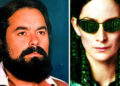
Intimidation tactics are not limited to physical threats. Another whistleblower, Matthew Brown—a former senior advisor to the Department of Defense and State Department who revealed the existence of a secret UAP data-collection program named “Immaculate Constellation” in May 2025—reported that his home was broken into while he slept, intelligence officers infiltrated his social networks, and coordinated online disinformation campaigns were launched to discredit him.
As public and congressional interest in Unidentified Anomalous Phenomena (UAP) reaches unprecedented levels, lawmakers continue to demand transparency regarding decades of alleged government concealment of non-human technology. However, with the number of high-level military and intelligence witnesses rising sharply, Corbell warns that the personal cost for those demanding accountability remains extraordinarily high.