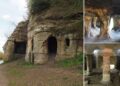
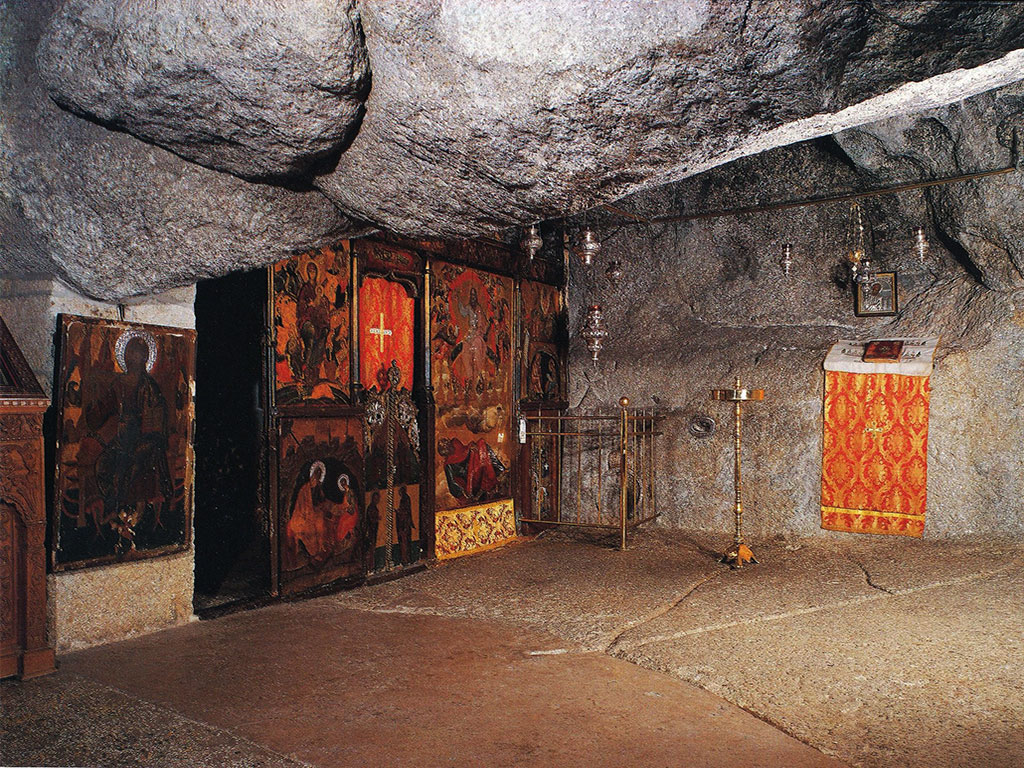
On the serene Greek island of Patmos in the Aegean Sea lies one of Christianity’s most revered sites: a modest limestone cave known as the Cave of the Apocalypse.
According to longstanding Christian tradition, this small grotto is where the Apostle John—exiled to Patmos around 95 AD by Roman authorities under Emperor Domitian—received the dramatic visions that became the Book of Revelation, the final book of the New Testament.
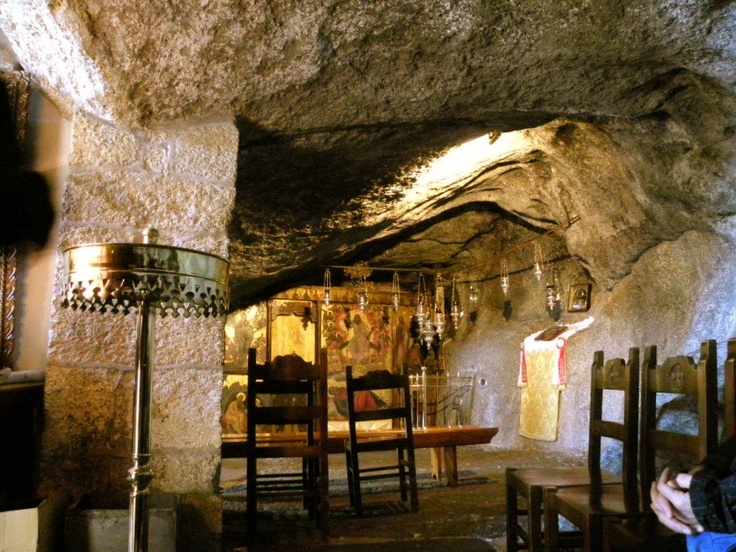 In the opening verses of Revelation itself, John writes that he was on the island “because of the word of God and the testimony of Jesus” (Revelation 1:9). Early church tradition holds that, while taking refuge in the cave, John experienced profound divine revelations: a voice speaking through fissures in the rock (symbolizing the Holy Trinity in some accounts), commanding him to record what he saw and send messages to the seven churches of Asia Minor.
John did not pen the text alone. He dictated his visions to his faithful disciple and scribe, Prochorus (one of the seven deacons mentioned in Acts 6:5), who transcribed the apocalyptic imagery of cosmic battles, symbolic beasts, divine judgment, and the ultimate victory of God. These vivid descriptions have profoundly influenced Christian theology, art, literature, and eschatological thought for nearly two millennia.
Today, the Cave of the Apocalypse—located midway between the port of Skala and the hilltop village of Chora—remains an active place of worship within the Greek Orthodox Church. A chapel has been built around it, preserving features like the rock cleft and the lectern associated with Prochorus. Alongside the nearby Monastery of Saint John the Theologian (founded in 1088), the site was designated a UNESCO World Heritage Site in 1999, recognized as one of the holiest places in Christianity.
What sets this cave apart is its direct link not just to a biblical figure, but to the very composition of a canonical scripture—rooted in a specific historical moment of exile, persecution, and divine encounter that John himself described. For pilgrims and visitors, standing in the quiet grotto offers a tangible connection to the origins of one of the Bible’s most enigmatic and powerful books.