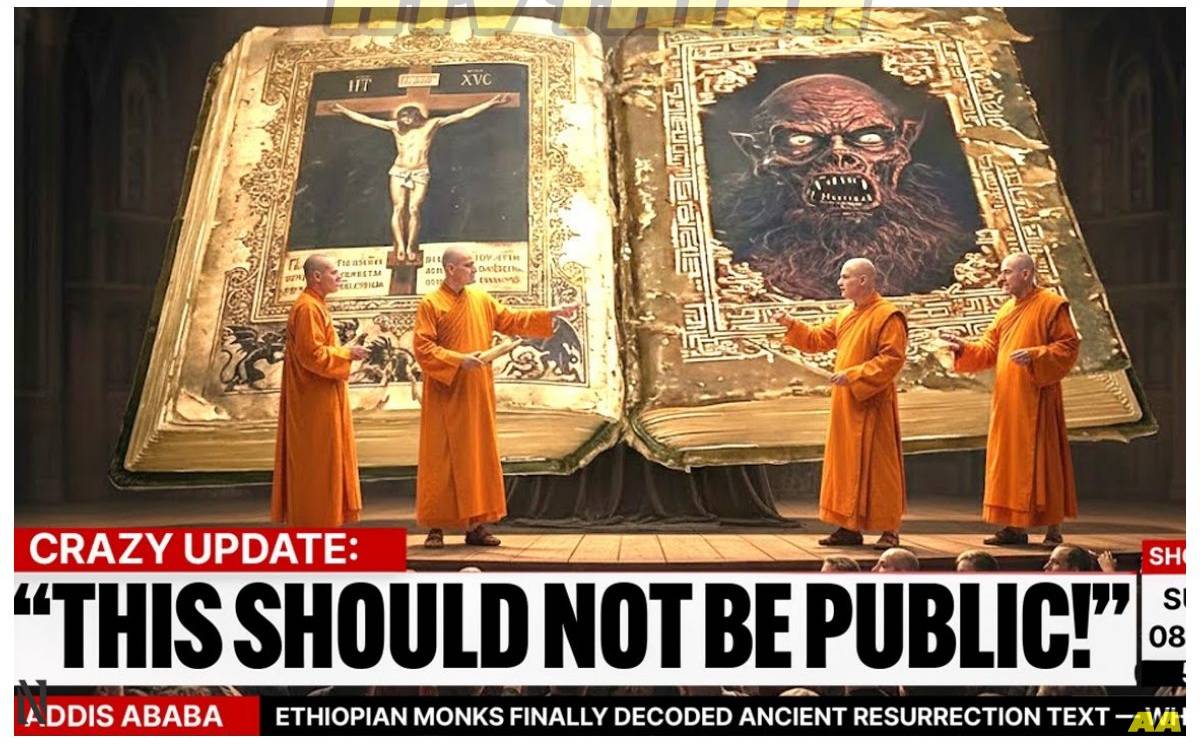
Recent claims circulating online and in viral videos suggest that Ethiopian monks in remote mountain monasteries have released or translated a long-guarded ancient resurrection passage from manuscripts preserved in the Ethiopian Orthodox Church tradition. These accounts describe the text as a profound, confrontational account of events following Jesus’ resurrection—unlike the narratives in the standard Western Gospels—potentially offering new insights into early Christian teachings on life, death, and the soul.
The Ethiopian Orthodox Tewahedo Church maintains one of the broadest biblical canons in Christianity, with 81 books compared to the 66 in most Protestant Bibles or the slightly expanded Catholic canon. This includes additional texts such as the Book of Enoch, Jubilees, and others classified as deuterocanonical or apocryphal in other traditions. Ancient manuscripts, often written in Ge’ez and safeguarded for centuries in isolated monasteries like those housing the famous Garima Gospels (dated to the 4th–7th centuries AD), represent a living link to early Christianity in Africa.
Viral narratives from 2025–2026 portray this “resurrection passage” as a hidden or forbidden element that challenges conventional biblical interpretations. Some videos and posts claim it provides detailed post-resurrection teachings over a 40-day period, framing the event not as mere triumph but as an instructive, even unsettling, confrontation with spiritual realities. Proponents suggest it was deliberately excluded from mainstream canons, preserved only in Ethiopia due to the church’s independence from later Western councils.
Related sensational claims link these manuscripts to the Ark of the Covenant—traditionally believed by Ethiopian Orthodox tradition to reside in Aksum, brought there according to the Kebra Nagast (Glory of Kings) by Menelik I, son of King Solomon and the Queen of Sheba. Stories speculate the Ark as an advanced technological device or “Frequency Codex,” though mainstream scholarship views such ideas as speculative and unsupported by evidence; the object in Aksum is widely regarded as a replica, with access restricted to a single guardian.
Other dramatic elements in these accounts include references to a “Solomonic Bloodline” potentially carrying genetic significance relevant to modern times, echoing 2012 genetic studies showing ancient Levantine admixture in some Ethiopian populations around 3,000 years ago—consistent with legends of the Queen of Sheba but not proving direct descent or hidden codes. A figure named “Dr. Samuel,” described as a whistleblower silenced for inquiries, appears in these stories but lacks verifiable corroboration in academic or news sources.
While Ethiopia’s rich manuscript heritage—including the world’s oldest illustrated Christian Bibles—continues to fascinate scholars, no major peer-reviewed archaeological or textual discovery in recent years matches the scale or specifics of these viral claims. Many appear rooted in YouTube videos, social media posts, and sensational content that amplify mystery and controversy, often blending established facts about Ethiopian Christianity with unverified interpretations.
The Ethiopian Orthodox Church’s broader canon and preserved texts have long invited reevaluation of early Christian diversity, highlighting how regional traditions shaped scripture transmission. Whether this particular “resurrection passage” represents a genuine newly translated ancient text or an exaggerated retelling of known apocryphal material remains debated amid the online buzz. As interest grows, it underscores the enduring allure of Ethiopia’s ancient Christian legacy and its potential to prompt fresh dialogue between faith, history, and scholarship.
In an era of rapid information spread, such revelations—real or amplified—challenge believers and skeptics alike to examine sources critically while appreciating the profound mysteries still held in Ethiopia’s monastic archives. The pursuit of hidden truths in ancient texts continues to captivate, reminding us that history’s sacred pages may yet hold surprises for those willing to look closely.