
The Shroud of Turin, one of history’s most enigmatic and debated relics, has once again captured global attention following recent comments by filmmaker Mel Gibson. Known for his deep interest in Christian themes—most notably through his 2004 film The Passion of the Christ—Gibson has reignited discussions about whether this ancient linen cloth truly bears the image of Jesus Christ’s crucified body or remains a medieval artifact.
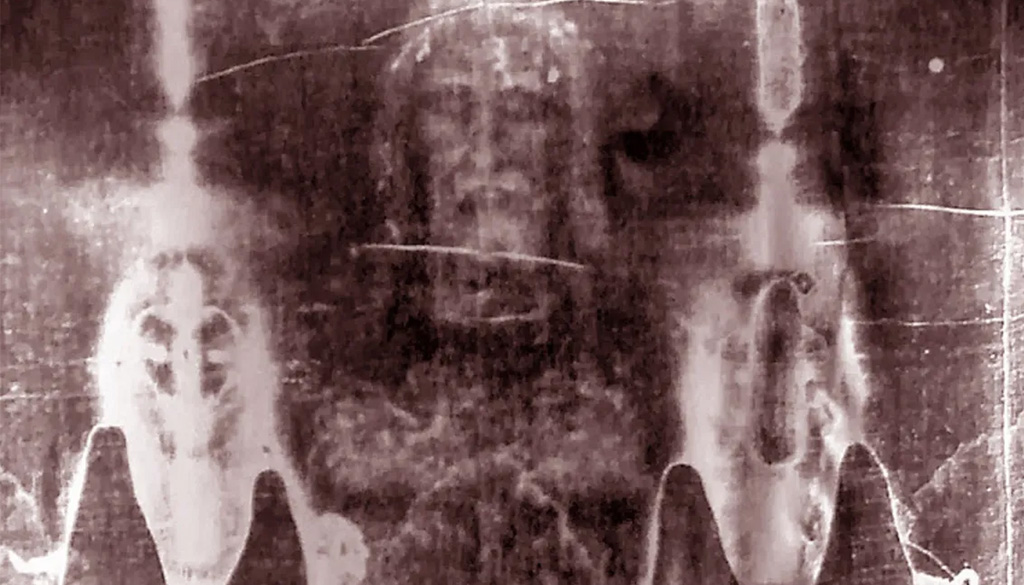
The Shroud of Turin is a length of linen cloth that displays the faint, negative-like image of a man who appears to have suffered crucifixion wounds, including scourge marks, nail piercings in the wrists and feet, and a side wound. Believers view it as the burial shroud that wrapped Jesus after his death on the cross, while skeptics have long regarded it as a clever forgery from the Middle Ages.
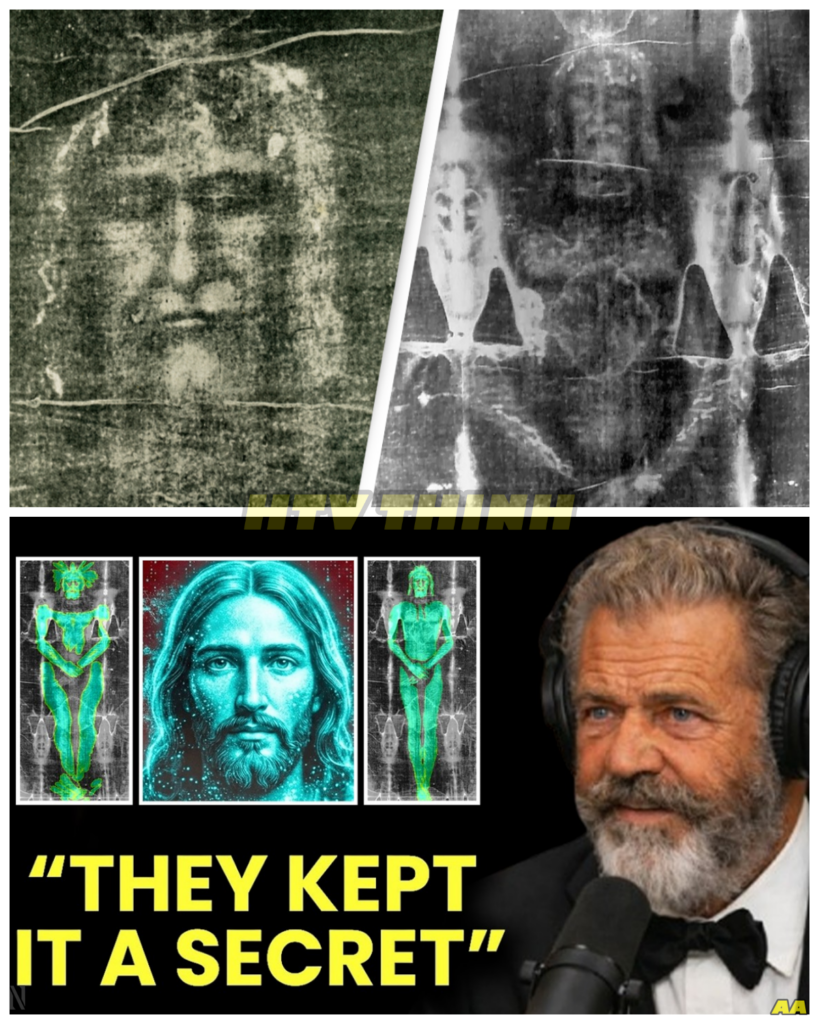 The controversy traces back to the 1980s, when carbon-14 dating conducted by three independent laboratories dated samples of the cloth to between approximately 1260 and 1390 AD, suggesting a medieval origin. This finding has been a cornerstone of skeptical arguments for decades. However, Gibson and others have challenged the reliability of those results, pointing to potential contamination of the tested samples—possibly from repairs after a 1532 fire—or from a section not representative of the original fabric.
In recent appearances, including a high-profile discussion on The Joe Rogan Experience podcast, Gibson emphasized that the Shroud’s image defies easy explanation. He described it as a superficial “negative” imprint burned into the cloth’s surface at a microscopic level, lacking pigments, brush strokes, or artistic media. Forensic details—such as real human blood (type AB) showing signs of trauma, pollen grains linked to the Jerusalem region, and 3D-encoded information in the image—continue to puzzle scientists. Gibson highlighted how the image cannot be fully replicated using known medieval techniques, and he referenced ongoing research suggesting the cloth’s age may align more closely with the first century.
Recent studies have added fuel to the debate. Advanced techniques, including wide-angle X-ray scattering and other non-destructive analyses, have proposed dates closer to the time of Jesus. Meanwhile, explorations with artificial intelligence and modern imaging have uncovered finer details in the cloth, though interpretations vary widely. Some researchers argue these findings undermine the 1980s carbon dating, while others maintain the medieval attribution or suggest alternative formation methods, such as contact with a sculpted relief rather than a real body.
Gibson’s passionate defense frames the Shroud not merely as a historical curiosity but as a profound intersection of faith and science. He has suggested that certain conclusions may have been influenced or suppressed, urging a reevaluation of the evidence without preconceptions. His comments have sparked widespread reactions, from renewed hope among believers to renewed scrutiny from skeptics.
 The implications extend far beyond academia. For many, the Shroud represents a tangible link to the events of the Gospels and a symbol of divine mystery in an age of rational inquiry. Whether viewed as authentic proof of the Resurrection or an extraordinary medieval creation, it continues to provoke questions about history, belief, and the limits of scientific certainty.
As new technologies and analyses emerge, the conversation around the Shroud of Turin shows no signs of fading. Gibson’s bold stance has thrown down a challenge: to confront the evidence anew and consider whether long-held assumptions might warrant revision. In doing so, the relic remains a powerful reminder of humanity’s enduring quest for truth amid faith and doubt.