In the early 1980s, American amateur explorer and self-described biblical archaeologist Ron Wyatt claimed to have made one of the most extraordinary discoveries in modern religious history: the Ark of the Covenant hidden in a cave directly beneath the traditional site of Jesus Christ’s crucifixion at Golgotha in Jerusalem.
According to Wyatt’s accounts, shared through lectures, videos, and his supporters’ publications, he and his team excavated tunnels beneath Mount Calvary (also known as Golgotha). There, they reportedly located a large chamber containing the biblical Ark of the Covenant—the gold-covered chest built by the Israelites to house the stone tablets of the Ten Commandments, as described in the Book of Exodus.
Wyatt described the Ark as matching scriptural details: constructed of wood overlaid with gold, topped by a mercy seat flanked by cherubim. He claimed the artifact remained guarded by four angelic beings who appeared as ordinary young men. These entities allegedly permitted him to photograph the Ark, lift the mercy seat, and view the stone tablets inside, though they retained any video footage until a divinely appointed time.
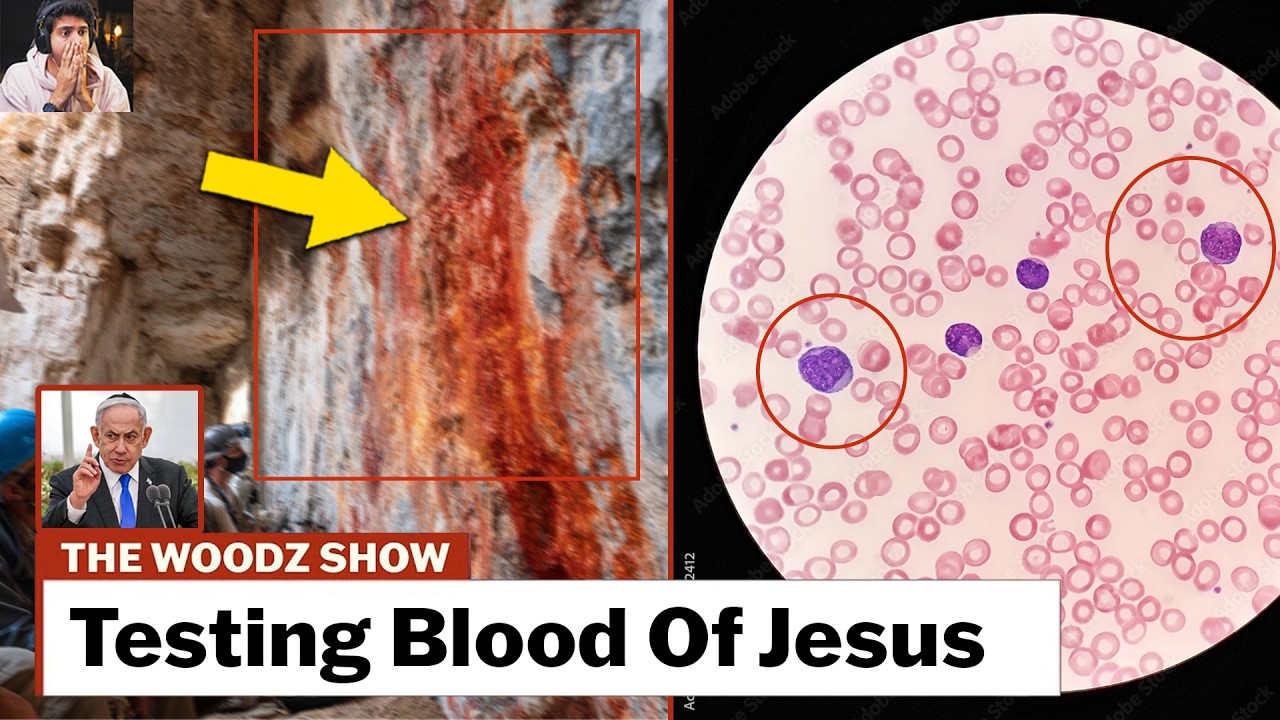
A central and dramatic element of Wyatt’s narrative involves the crucifixion itself. The Bible records a massive earthquake at the moment of Jesus’ death (Matthew 27:51), splitting rocks. Wyatt asserted that this event created a fissure in the rock directly under the cross, allowing Jesus’ blood and water to flow down through the crack and onto the mercy seat of the Ark below—symbolizing the ultimate atonement covering the law within the Ark.
Wyatt said he collected samples of dried blood from the site. He reportedly took these to a laboratory in Israel (accounts vary on the exact location, with some mentioning Jerusalem and others Nashville, Tennessee). Under microscopic examination after rehydration in saline solution for 72 hours, the blood allegedly revived, with white blood cells showing activity. The most sensational finding: the sample contained only 24 chromosomes—23 from the mother (aligning with human maternal contribution) and one Y chromosome from a non-human source—rather than the standard 46 (23 from each parent).
Wyatt and his followers interpreted this as scientific proof of the virgin birth: Jesus inherited human DNA solely from Mary, with the additional chromosome from God the Father, confirming His divine nature. Lab technicians, according to Wyatt, were stunned and inquired whose blood it was; he replied it belonged to “your Messiah.”
Supporters point to a declassified CIA document from remote viewing experiments (a Cold War-era psychic research program) that describes a hidden, protected container resembling the Ark—made of wood, gold, and silver, decorated with angelic figures, located underground in the Middle East, and linked to themes of resurrection and ceremony. The document notes it is safeguarded by unknown entities and cannot be opened prematurely without dire consequences.
Wyatt, who passed away in 1999, also claimed other biblical finds, including Noah’s Ark, the site of the Red Sea crossing, and more. He maintained these discoveries bolster faith, especially for skeptics demanding empirical evidence beyond scripture.
However, Wyatt’s claims remain highly controversial and are widely rejected by mainstream archaeologists, biblical scholars, and scientific communities. Professional organizations, including the Israel Antiquities Authority, have dismissed his work as lacking verifiable evidence—no peer-reviewed publications, independent lab reports, or physical artifacts have ever been produced for scrutiny. Critics describe his stories as unsubstantiated, with inconsistencies (e.g., shifting details on blood testing locations) and no corroborating documentation from any recognized laboratory confirming the 24-chromosome analysis or “living” blood after 2,000 years.
Sites like the Garden Tomb Association in London have explicitly refuted any connection to Wyatt’s alleged discoveries beneath their property. Many experts classify his assertions in the realm of pseudoarchaeology, comparable to sensational tabloid claims rather than rigorous scholarship.
Despite the skepticism, Wyatt’s story continues to circulate widely online, inspiring faith among believers who see it as confirmation of biblical truths through modern discovery. Whether viewed as profound evidence or unproven legend, the tale of the Ark, the blood, and the chromosomes beneath Golgotha remains one of the most debated episodes in contemporary Christian archaeology.