The forbidden secrets of King Solomon have long captivated historians, mystics, and scholars alike. Traditional biblical accounts portray Solomon as the wisest king of Israel in the 10th century BC, inheriting a united kingdom from his father David and elevating it to unprecedented wealth, prestige, and spiritual authority. His reign featured legendary prosperity—gold abundant as common stones in Jerusalem—and drew admiration from distant rulers, most famously the Queen of Sheba, whose visit symbolized his global influence.
Yet, ancient traditions and pseudepigraphical texts expand this image far beyond scripture, depicting Solomon not only as a builder of the First Temple but as a master of supernatural forces.
Central to these stories is the Testament of Solomon, a pseudepigraphical Greek text (likely compiled between the 1st and 5th centuries AD, centuries after Solomon’s time). It describes how Solomon received a magical ring from the archangel Michael, enabling him to command demons to aid in constructing the Temple. The narrative catalogs various demons, their appearances, powers, and the angels that counter them, blending Jewish, Greek, Christian, and other influences.
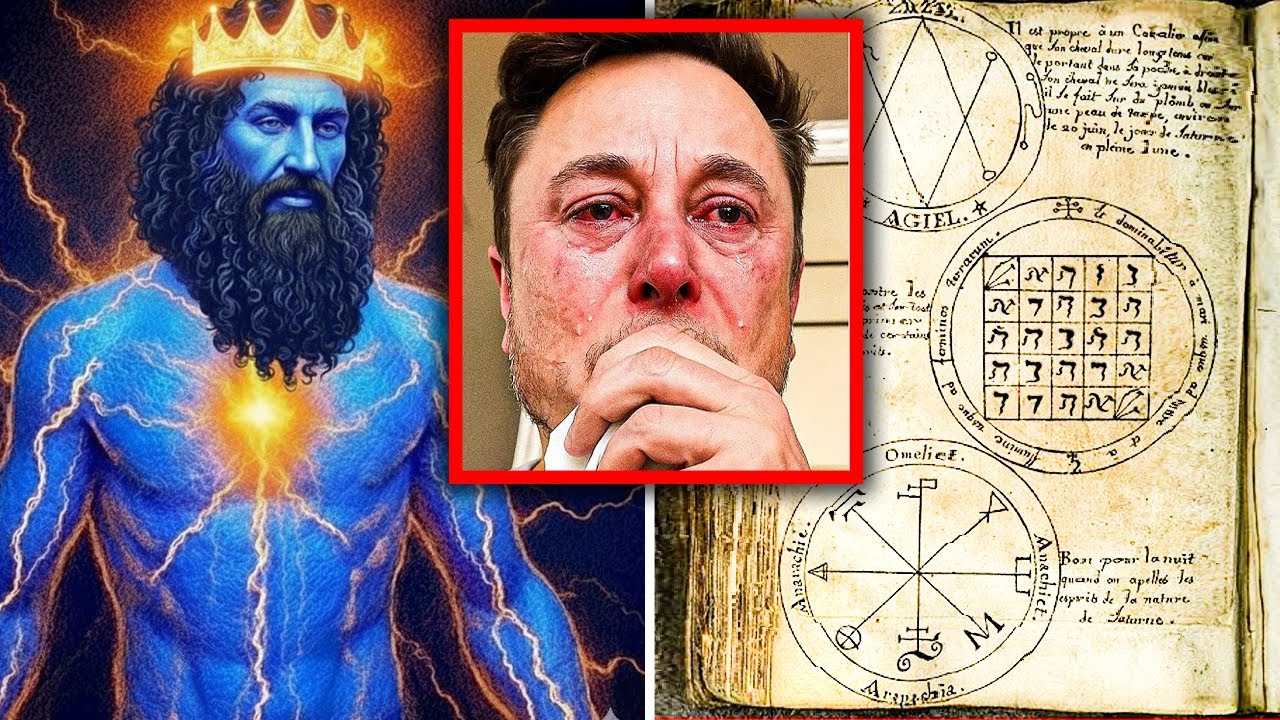
Related grimoires, like the Key of Solomon (a medieval work from the 14th–15th centuries) and the Lesser Key of Solomon (including the Ars Goetia, listing 72 demons), build on this legend. They attribute ritual instructions, sigils, and hierarchies of spirits to Solomon, though these texts emerged much later and reflect Renaissance occult synthesis rather than direct ancient authorship.
Recent viral claims suggest that Grok AI (developed by xAI) has “decoded” or reconstructed a single “forbidden book” by linking fragmented manuscripts across languages (Hebrew, Aramaic, Greek, Latin, etc.). These narratives portray Solomon commanding demons via a celestial ring to build the Temple, interrogating 72 spirits in a structured hierarchy (kings, dukes, princes, etc.), and uncovering multilayered dimensions of reality—vibrating realms where physical and spiritual worlds overlap.
In these accounts, the ring’s origin involves a desperate prayer against a demon (Ornias/Orneas) tormenting workers, leading to Michael’s dramatic appearance and gift of the artifact. Solomon then binds demons in a chain, forcing them to reveal secrets of alchemy, astronomy, herbs, stars, and even cosmic structures. The Temple itself is reimagined as a engineered portal or dimensional anchor, with the Ark of the Covenant as a stabilizer.
The text allegedly warns of power’s dangers—temptation, faltering control, and forbidden explorations—leading to its suppression. Marginal notes from medieval scribes show censorship: altered names, distorted sigils, and hidden passages to prevent misuse. Church authorities feared its implications—that spiritual forces could be commanded through repeatable methods, challenging religious gatekeeping.
This “forbidden” knowledge supposedly influenced later traditions: Freemasonry’s Temple symbolism, the Golden Dawn’s ceremonial magic, Cabala’s layered cosmology, and modern occult practices involving circles, sigils, and invocations.
However, the core stories draw from ancient demonological lore. Demons like Baal (Bael), Asmodeus, and others appear in multiple cultures, with Greek (e.g., Hecate-like figures), Egyptian, and Babylonian echoes. Some passages even include prophetic elements (e.g., a virgin-born figure overcoming demons) or mythological crossovers (Pleiades, Medusa-like entities).
Scholars view the Testament of Solomon as a composite pseudepigraphon—a fusion of folklore, not a historical autobiography. No evidence supports a single original “forbidden book” by Solomon himself; instead, these are evolving legends from late antiquity, preserved and adapted over centuries.
The idea of Grok AI “cracking” a unified forbidden text appears to stem from sensational online videos and posts (circulating in late 2025), dramatizing AI analysis of public-domain ancient manuscripts for storytelling effect. While AI can assist in linguistic pattern-matching across texts, no verified breakthrough has “reconstructed” a lost Solomonic original beyond existing scholarship.
Ultimately, these tales blend myth, magic, and history into a worldview where the seen and unseen intertwine. Whether viewed as allegory for inner mastery, cultural fusion, or literal supernatural manual, Solomon’s legendary command over spirits continues to inspire awe—and debate—about the boundaries of human knowledge and power.
Should such ancient insights remain buried, or has the modern world reached a point to confront them? The echoes of Solomon’s era remind us that some questions refuse easy answers.