HOLY MYSTERY ERUPTS: What Explorers Claim to Have Found Inside the Supposed Ark in Turkey Has Believers and Skeptics in Fierce Showdown!
In recent years, reports have circulated claiming that archaeologists have opened Noah’s Ark in Turkey and discovered remarkable evidence inside.
These claims have attracted significant public attention, often accompanied by dramatic headlines and bold conclusions.
 However, a closer examination of the available information reveals a far more measured and complex situation.
While researchers have studied a site in eastern Turkey associated by some with the biblical Ark, there is no verified evidence that Noah’s Ark has been opened or definitively identified.
The location most often linked to these claims is near **Mount Ararat**, the highest peak in Turkey.
Mount Ararat has long been connected to the biblical flood narrative.
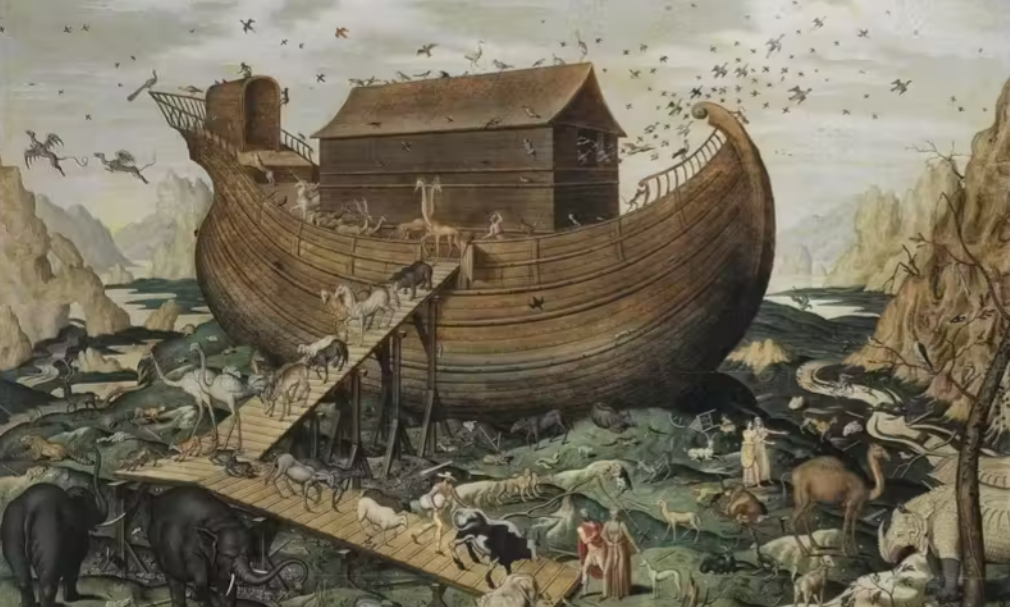
According to the Book of Genesis, after a catastrophic flood covered the earth, Noah’s Ark came to rest “on the mountains of Ararat.
” Over centuries, this passage has inspired explorers, scholars, and religious believers to search the region for physical traces of the Ark.
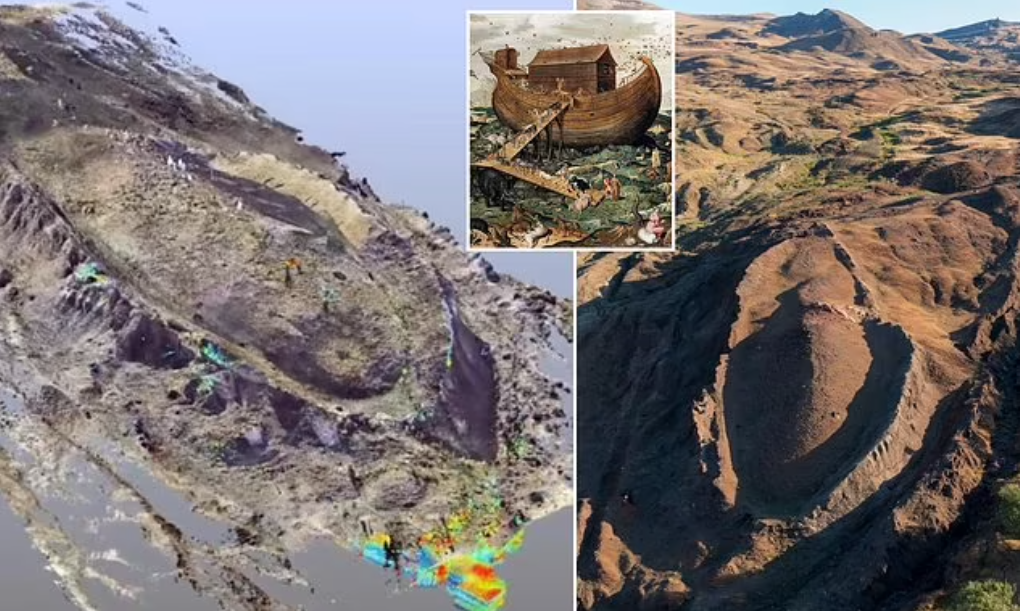
One specific site that has drawn repeated interest is the Durupinar formation.
Discovered in 1959 by Turkish army captain İlhan Durupınar during aerial mapping operations, the formation has a shape that resembles a large ship when viewed from above.
It lies approximately 30 kilometers south of Mount Ararat and measures roughly 164 meters in length.
Some researchers have noted that this measurement is similar to the biblical description of the Ark’s dimensions when ancient cubits are converted into modern units.
Because of its distinctive shape, the Durupinar formation has been the subject of numerous investigations.
Various research groups have conducted soil analyses, ground-penetrating radar surveys, and geological studies.
Some have suggested that anomalies detected beneath the surface could indicate a man-made structure.
Others, particularly professional geologists, argue that the formation is entirely natural, formed by sedimentary processes and erosion.
Recent headlines claiming that archaeologists “opened” Noah’s Ark appear to stem from renewed research efforts at the site.
Teams have reportedly collected soil samples and used imaging technologies to examine the subsurface composition of the formation.
These activities are standard investigative methods in archaeology and geology.
However, there has been no confirmed excavation revealing a preserved wooden vessel or identifiable ship structure.
Understanding the scientific process is essential in evaluating such claims.
Archaeology relies on systematic excavation, documentation, dating methods, and peer-reviewed publication.
Discoveries of major historical significance are typically supported by multiple lines of evidence and verified by independent researchers.
At present, no peer-reviewed study has confirmed that the Durupinar formation contains the remains of Noah’s Ark.
Geological explanations for the formation are widely supported within the scientific community.
Many geologists classify the Durupinar site as a natural syncline—a fold in rock layers caused by tectonic pressure.
Over time, erosion can expose such folded layers in a way that resembles the outline of a ship.
The region around Mount Ararat is geologically complex, shaped by volcanic activity, earthquakes, and sedimentary processes.
These natural forces can create symmetrical and structured-looking formations without human involvement.
Soil differences reported at the site have also been cited as potential evidence of human activity.
However, variations in soil composition can result from numerous natural factors, including water drainage patterns, mineral content, and vegetation differences.
Without direct evidence of worked timber, nails, tools, or other artifacts clearly linked to ship construction, soil variations alone do not establish the presence of an ancient vessel.
Ground-penetrating radar (GPR) surveys conducted at the site have detected subsurface anomalies.
GPR is a non-invasive technique that uses radar pulses to create images of what lies beneath the ground.
While it can reveal patterns or irregularities, interpretation requires caution.
Subsurface anomalies can reflect rocks, voids, density changes, or natural layering.
Confirming the presence of a man-made structure would require careful excavation and material analysis.
Another important consideration is the preservation of wood over thousands of years.
Wood typically decomposes unless preserved under specific environmental conditions, such as being submerged in waterlogged soil or protected in extremely dry climates.
A large wooden vessel exposed to mountain weather, seismic activity, and erosion would likely deteriorate significantly.
Claims of intact wooden structures would need to be supported by physical samples subjected to dating techniques such as radiocarbon analysis or dendrochronology.
To date, no verified wooden beams or ship components from the Durupinar formation have been presented in peer-reviewed scientific literature.
Without datable material and clear structural evidence, the claim that Noah’s Ark has been opened remains unsubstantiated.
It is also useful to consider the broader historical and literary context of the flood narrative.
Flood stories appear in several ancient Near Eastern texts, including the Epic of Gilgamesh.
Many scholars view these narratives as reflecting regional flooding events that became embedded in cultural and religious traditions.
From a historical perspective, distinguishing between symbolic or theological meaning and literal archaeological evidence is an important part of responsible scholarship.
Public interest in Noah’s Ark reflects its enduring cultural and religious significance.
For many believers, the Ark symbolizes faith, obedience, and survival.
The possibility of discovering physical evidence that aligns with the biblical account is compelling.
At the same time, scientific inquiry operates independently of theological interpretation.
Archaeologists focus on material evidence, dating methods, and reproducibility.
Media coverage can sometimes amplify preliminary findings into dramatic conclusions.
Phrases such as “opened the Ark” or “what they found will shock everyone” generate attention but may not accurately reflect the cautious nature of scientific investigation.
In most cases, research progresses incrementally.
Data is collected, analyzed, debated, and published for peer review.
In Turkey, archaeological research is subject to government oversight and preservation regulations.
Excavations require official permits, and culturally sensitive sites are treated with care.
Large-scale excavation of the Durupinar formation would involve significant logistical planning and scientific coordination.
So far, no excavation has produced confirmed ship remains.
It is important to distinguish between ongoing investigation and confirmed discovery.
Researchers may continue to study the Durupinar formation using improved technologies, including advanced imaging and material analysis.
Future findings could provide additional insight into the site’s formation and history.
However, at present, the prevailing scientific view holds that the formation is a natural geological feature.
The continued fascination with Noah’s Ark highlights the intersection of faith, history, and science.
Stories that have shaped human culture for millennia naturally invite curiosity about their physical traces.
Advances in technology make it possible to examine ancient sites with greater precision than ever before.
Yet even with sophisticated tools, evidence must meet rigorous standards before extraordinary conclusions are accepted.
In summary, claims that archaeologists have opened Noah’s Ark in Turkey and found shocking evidence are not supported by confirmed archaeological data.
Investigations at the Durupinar formation near Mount Ararat have identified geological features and subsurface anomalies, but no verified ancient wooden vessel has been excavated or authenticated.
The site remains a subject of debate and ongoing study.
As research continues, new data may emerge.
For now, however, the story of Noah’s Ark remains grounded primarily in religious tradition and cultural history rather than confirmed archaeological discovery.
Careful evaluation of evidence and respect for scientific methodology are essential in assessing such claims.