Nikola Tesla remains one of history’s most brilliant and enigmatic inventors, whose pioneering work on alternating current (AC) fundamentally shaped modern electricity. Without his AC innovations, the world would lack the efficient power distribution that lights cities and powers industries today.
In the early 1900s, Tesla turned his attention to an even more ambitious vision at Wardenclyffe Tower in Shoreham, Long Island, New York. Officially presented as a wireless communication project, the 187-foot-tall wooden structure topped with a large metal dome was intended to transmit messages across distances without wires—an early precursor to radio technology.
However, Tesla’s true goal extended far beyond communication. He aimed to develop a global system for wireless transmission of electrical power, harnessing the Earth’s natural conductivity to deliver energy anywhere on the planet. He envisioned the planet itself acting as a giant conductor, with energy propagating through the ground and atmosphere at resonant frequencies.
Tesla secured initial funding from financier J.P. Morgan in 1901, who provided around $150,000 (a substantial sum equivalent to millions today) under the belief that the tower would primarily enable profitable wireless telegraphy, competing with emerging technologies like Guglielmo Marconi’s radio. Tesla had pitched it as a communication tool to avoid revealing his broader ambitions for free, universal power access.
Beneath the tower, Tesla constructed an elaborate underground network of tunnels, chambers, and iron grounding pipes extending deep into the earth, connecting to the water table. He believed this setup would allow the tower to “grip” the planet electrically, creating a natural circuit for energy transmission.
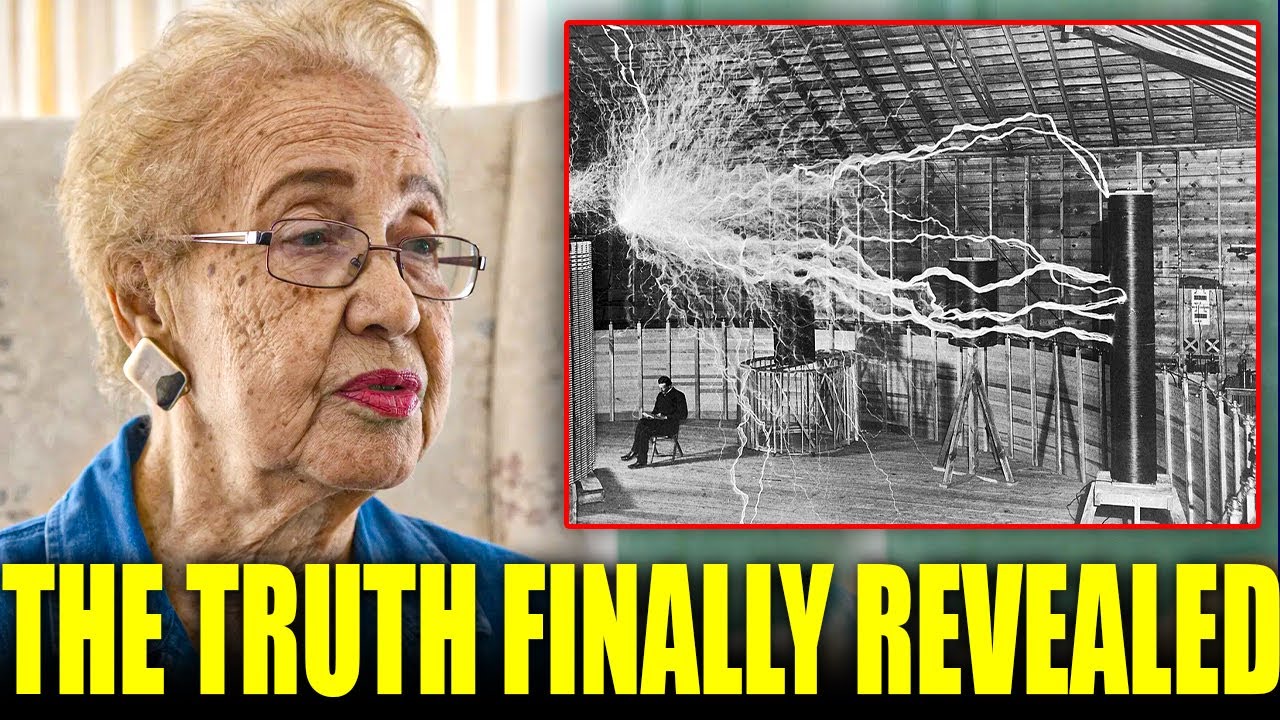
Tesla’s ideas drew from his earlier experiments, including those in Colorado Springs in 1899, where he successfully lit bulbs miles away wirelessly and produced massive electrical discharges.
A mysterious figure in the story is a young female engineer who served as one of Tesla’s close assistants during the Wardenclyffe project. According to later accounts—often circulated in dramatic retellings—she claimed to have witnessed extraordinary tests, including lighting distant bulbs without wires. Her identity remains obscure in historical records, and much of the narrative around her “erased” name and deathbed revelations appears in modern sensational videos and posts rather than verified primary sources.
The project’s turning point came in 1903. One night that spring, Tesla and his assistant reportedly conducted a full-power test in secrecy, late at night with no observers or official logs. Activating the tower’s coils and oscillators, they generated a massive electrical surge. Witnesses miles away described unusual sky flashes and glowing lights in unconnected homes, while telegraph systems across Long Island experienced interference and outages.
Tesla reportedly observed the results calmly, whispering calculations, before shutting down the system amid overheating and instability. He is said to have remarked quietly, “It works,” though with a note of apprehension rather than triumph, aware of the immense power involved.
Afterward, strange figures in dark uniforms were spotted watching from the treeline—possibly private security, government agents, or foreign observers—fueling speculation of surveillance.
Morgan soon withdrew further support. Historical accounts indicate Tesla exhausted the initial funding and requested more, but Morgan declined, reportedly concerned about the commercial viability of a system that could not be easily metered for profit. As Morgan’s backing ended, the project collapsed: staff departed, construction halted, and the tower fell into disrepair.
In the years that followed, officials visited the site under various pretexts, removing equipment and documents. After Tesla’s death in 1943 in a New York hotel room, the Office of Alien Property seized his papers—despite his U.S. citizenship—citing wartime concerns. While many materials went to his nephew and eventually to the Nikola Tesla Museum in Belgrade, discrepancies in inventories suggest some files, particularly those related to wireless power and resonant transmission, may have been “relocated” or withheld.
The tower itself was dismantled in 1917 to pay off debts, sold for scrap.
Decades later, declassified documents and anomalous geophysical records from 1903 have prompted renewed interest. Some researchers point to unexplained electromagnetic disturbances that night, with patterns resembling Tesla’s predicted Earth-resonant frequencies. Faint electrical fluctuations persist near the former site, though most attribute them to modern interference rather than a lingering “resonance.”
While conspiracy theories persist—claiming suppression of free energy by powerful interests—the documented history shows Wardenclyffe failed primarily due to funding shortfalls, over-optimistic projections, and shifting priorities in wireless technology. Tesla’s vision of unlimited, accessible power remains inspiring, even if the full truth of that fateful night at Wardenclyffe Tower blends fact, legend, and unanswered questions.
What really happened inside Wardenclyffe Tower that night in 1903? The evidence suggests a groundbreaking—but ultimately unsustainable—demonstration of wireless energy principles, one that hinted at possibilities far ahead of its time.