One of the most persistent misconceptions in popular history is that the Aztecs constructed the majestic pyramids and sprawling urban grid of Teotihuacan. In reality, they did not. When the Aztecs—also known as the Mexica—migrated into central Mexico and rose to power around AD 1300, Teotihuacan had already lain in ruins for approximately 700 years. By the time the Aztecs encountered it, the once-thriving metropolis was an abandoned relic, its towering structures weathered by centuries of neglect and overgrown vegetation.
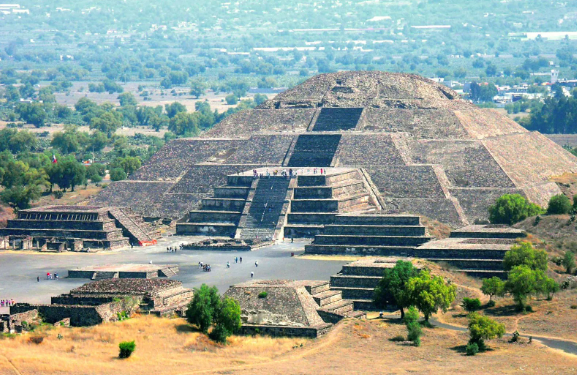 The city’s true builders remain one of archaeology’s greatest mysteries. No decipherable writing system, no inscriptions naming rulers, and no grand royal tombs have been found to identify them. Unlike the Maya with their detailed glyphs or the later Aztecs with their codices, the people of Teotihuacan left behind no clear historical record of their leaders or language. Scholars believe the city was founded around 100 BC to AD 100, reached its zenith between AD 100 and 550, and supported a population estimated at 100,000 to 200,000 at its peak—making it one of the largest urban centers in the world at the time, rivaling contemporary Rome.
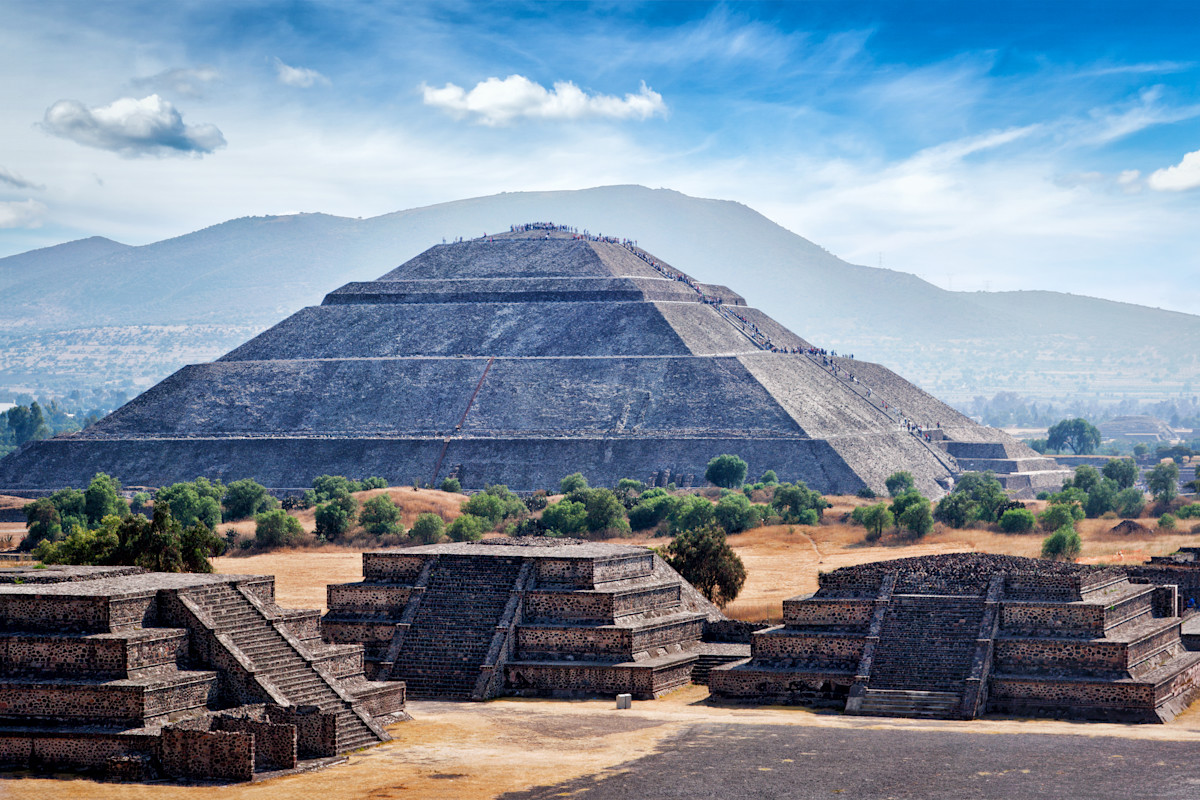
At the heart of Teotihuacan stands the monumental Pyramid of the Sun, the largest structure in the city and one of the biggest pyramids in the Western Hemisphere. Rising about 216 feet (66 meters) high with a base measuring roughly 720 by 760 feet (220 by 230 meters), it was constructed in phases, primarily around AD 100–200, using millions of tons of volcanic rock, adobe, and rubble. Aligned with astronomical events and part of a meticulously planned grid layout centered on the Avenue of the Dead, the pyramid (along with the nearby Pyramid of the Moon and the Ciudadela complex) reflects sophisticated engineering, urban planning, and possibly religious cosmology. The city’s multi-ethnic population—drawn from various Mesoamerican groups—lived in sprawling apartment compounds, traded obsidian and ceramics across vast networks, and exerted cultural influence from what is now the southwestern United States to Central America.
When the Aztecs arrived centuries later, they were awestruck by the scale and grandeur of the ruins. They incorporated the site into their own mythology, naming it Teotihuacan, which translates to “the place where the gods were born” or “where men became gods.” In Aztec lore, this was the sacred location where the current sun and world were created after previous cosmic eras ended. The Aztecs made pilgrimages there, performed rituals, and even sourced building materials from the site, but they never claimed to have built it—they revered it as a divine, ancient place predating their own civilization.
What makes Teotihuacan’s disappearance so haunting is the scale of its collapse. The city began declining around AD 550–600, with major monuments deliberately burned and elite compounds sacked around AD 550–650. By AD 750 at the latest, it was largely abandoned. Theories for this sudden fall abound: prolonged droughts linked to global climate events (such as those around AD 535–536, possibly triggered by volcanic eruptions), environmental degradation from deforestation and soil exhaustion, internal social unrest or class rebellion against the elite, foreign invasion from northern groups, earthquakes causing structural damage, or a combination of these factors. Evidence includes signs of widespread fire, malnutrition in skeletal remains, and seismic cracks in key structures.
Teotihuacan stands today as a silent testament to a powerful, sophisticated civilization that rose brilliantly, dominated Mesoamerica for centuries, and then vanished so thoroughly that even its name and identity were lost to time. The Aztecs’ reverence ensured its enduring legacy, but the question lingers: How does a society capable of erecting such enduring monuments simply disappear without leaving a clear trace of who they were or why they left? Ongoing excavations and new discoveries—such as potential undeciphered symbols—continue to probe this enduring mystery, reminding us how much of the ancient world still hides in plain sight.