The James Webb Space Telescope (JWST) continues to deliver revelations that force astronomers—and the rest of us—to confront the sheer scale and unexpected maturity of the early universe, humbling long-held assumptions about cosmic history.
Positioned 1.5 million kilometers from Earth, this gold-coated marvel has been peering back to the universe’s infancy, capturing light from objects that existed mere hundreds of millions of years after the Big Bang. What it has found repeatedly challenges the standard picture: galaxies appearing far more massive, structured, and luminous than models predicted for such an early epoch.
Recent observations, including deep-field images and targeted studies released in late 2025 and early 2026, have uncovered surprisingly mature galaxies and even protoclusters forming when the universe was less than a billion years old. For instance, JWST has spotted galaxies like MoM-z14, existing just 280 million years after the Big Bang, shining with unexpected brightness and containing elements that suggest rapid, efficient star formation. Other finds include ultra-massive galaxies nearly as heavy as the Milky Way within the first billion years, dusty star-forming systems at the cosmic edge, and even a multi-galaxy merger involving at least five members around 800 million years post-Big Bang—far earlier and more complex than anticipated.
These discoveries don’t “break” cosmology, as some sensational claims suggest. Instead, they highlight gaps in our understanding of galaxy formation processes. Pre-JWST models expected a slower buildup: small, chaotic proto-galaxies gradually merging and maturing over billions of years. Yet JWST reveals efficient star factories, rapid growth, and structures that look almost fully formed too soon. Some early “massive” candidates turned out to be boosted by bright active black holes or dust effects, but even after corrections, the early universe appears more productive and populous with bright galaxies—sometimes twice as many as predicted.
Astronomers describe the early cosmos as more turbulent and dynamic than thought, with galaxies undergoing intense starbursts, collisions redistributing heavy elements, and dust production happening faster in primitive environments. One researcher likened young galaxies to “2-year-old children acting like teenagers,” capturing the accelerated evolution on display.
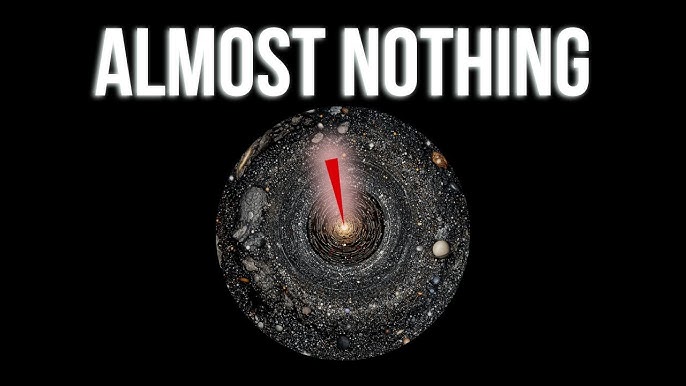
The implications ripple outward. These findings prompt revisions to models of star formation efficiency, the role of dark matter scaffolding, and even the timeline of reionization—the epoch when the first stars and galaxies cleared the fog of neutral hydrogen. While no evidence overturns core principles like the Big Bang or cosmic expansion, JWST underscores how incomplete our view was. We once mapped the universe with confidence based on shallower surveys; now, deeper infrared gazes show layer upon layer of galaxies receding into the background, with light traveling for over 13 billion years to reach us.
This vastness carries a psychological weight. Humanity’s spacefaring achievements—rovers on Mars, probes to distant planets, satellites orbiting Earth—suddenly feel minuscule against a cosmos that stretches billions of light-years and continues expanding at an accelerating pace. Parts of the universe recede faster than light can travel toward us, forever beyond reach due to physics itself.
Public reactions vary. Some find inspiration in the awe-inspiring beauty of JWST images: spiral galaxies aglow with starbirth, nebulae like cosmic lungs, jewels of light stacked across time. Others grapple with existential smallness—Earth as a pale blue dot in an indifferent expanse that never paused for our arrival.
Yet amid the humbling, there’s quiet pride in our persistence. JWST represents an engineering triumph and a testament to curiosity: we built a tool to look farther than ever before, and it answered by showing us how much remains unseen. The universe isn’t finished revealing itself. Each new deep field pushes the observable boundary closer to the cosmic dawn, hinting at phenomena we lack the full conceptual tools to interpret.
In the end, JWST hasn’t crowned us masters of the cosmos. It has reminded us we’re eternal beginners—curious observers peering into an unfolding reality far grander and more intricate than we imagined. And in that vastness, our drive to keep looking may be the most remarkable thing of all.