The Nazca Lines of Peru remain one of history’s most fascinating mysteries. They still mystify despite numerous attempts to unfold their secrets. Who designed and constructed the Nazca Lines, and why? How was it possible to make such accurate, large-scale drawings on the ground without using an airplane to check from a height?
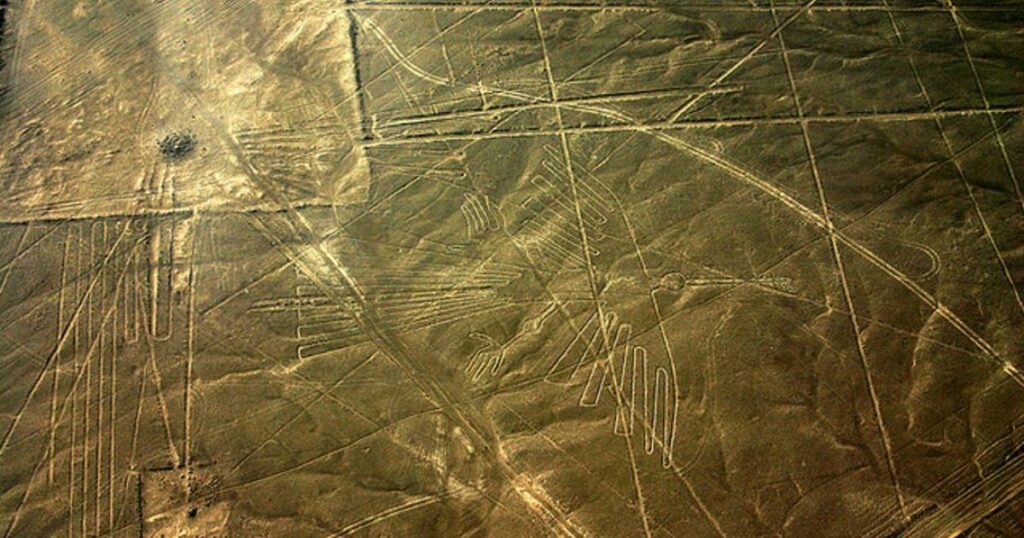 These key questions remain unresolved.
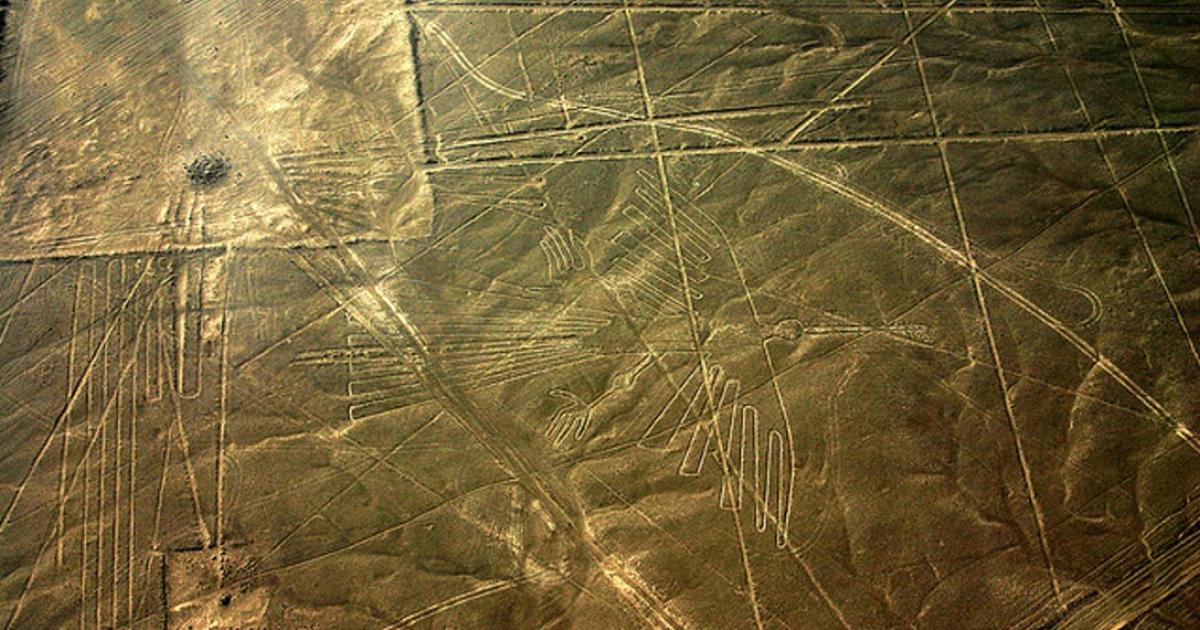
Over 13,000 lines form 800 figures, many in the shape of animals, but the most mysterious feature of the Nazca Lines is that the pictures they form are only visible from high up in the air. The figures, in fact, were discovered only in 1927, when Toribio Mejia Xespe, an airline pilot, flew over the area and discerned the various huge shapes.
In subsequent years there have been many hypotheses in an attempt to reveal the message: such as that of Erich Von Däniken who believed that the Nazca Lines were meant to be a sort of “landing light”, visible only to gods residing high in the sky, guiding them and awaiting their return to earth. A similar, equally imaginative theory is that the lines were created to be landing strips for extra-terrestrial aircraft. But there are more serious interpretations.
Various Theories: Gods, Extraterrestrials, and Astrological Markers
German archaeologist, mathematician, and technical translator Maria Reiche’s theory is that the lines have an astrological significance. Some of the figures seem to correspond directly to constellations visible during certain seasons throughout the year. For example, the figure of the Monkey correlates directly to the constellation Ursa Major, the Dolphin and Spider correlate with the constellation of Orion.
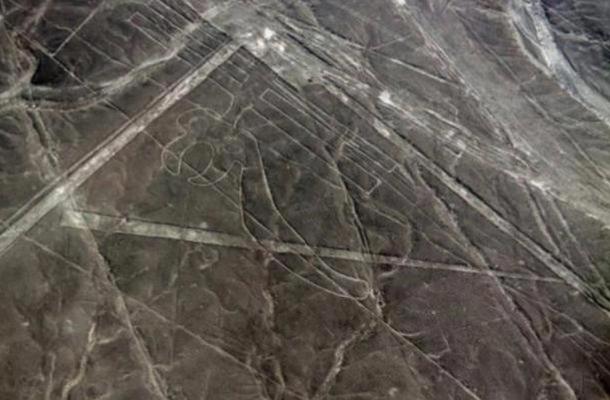 Independent American researcher, David Johnson, who worked in collaboration with researchers at the University of Massachusetts, proposes the hypothesis of archaeologists Markus Reindel (the “Commission for the non-European cultures” German Archaeological Institute) and Johnny Isla (Andean Institute of Archaeological Research): that there is a direct relationship between the geoglyphs of Nazca and the water in the area which could help solve the mystery of the Peruvian desert. He believes that the Nazca figures are markers for a subterranean water flow—Peruvian geoglyphs forming a huge map of underground water resources indicating locations of wells and aqueducts.
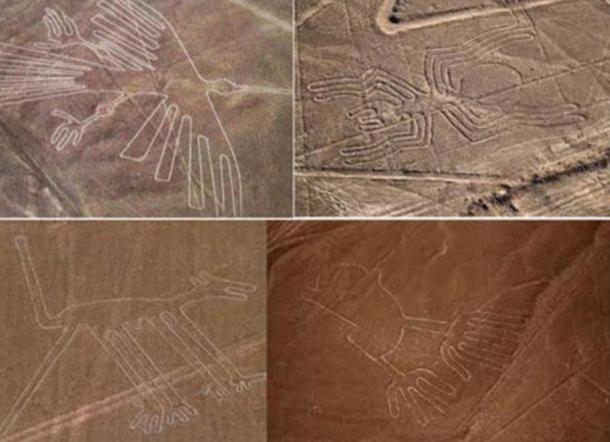 For example, a symbol of a trapezoid were to indicate that there is a well below the ground. Circles were drawn near fountains or springs. The hummingbird, (often represented in the lines, with his beautiful pointed beak) would indicate a large well. David Johnson’s theory is certainly interesting, but is not able to solve the full mystery, and is not applicable to all the drawings. The water theory falters under scrutiny, but perhaps the Nazca had greater advanced knowledge than we can imagine.
The German Archaeological Institute and the Institute of Andean Archaeological Research share yet another theory. They discovered religious offerings in small cavities near the geoglyphs which appeared to be appeasements to the gods, perhaps to ensure fertility, healthy crops, and a good water supply.
The most thought-provoking and mysterious of the animal figures is the spider. Entomologists have discovered that the spider design is of a genus belonging to Ricinulei, one of the world’s rarest spiders.
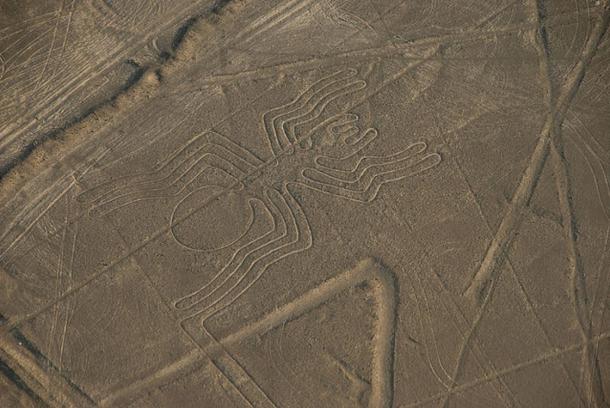 This particular species is not indigenous to Peru but lives only in the most inaccessible places in the Amazon forest, which is an incredible 1500 kilometers (932 miles) away. There is no doubt as to the species of spider, but the accuracy of the geoglyph is remarkable. This spider has its reproductive organs at the end of one of its legs but which is visible only under a microscope, so the question of how they even designed it in such fine detail remains unanswered.
 In addition, the method of construction remains unsolved: the lines stretch for miles, (some are more than eight kilometers [5 miles], others 65 kilometers [40 miles]), and are recognizable as an image only from far above land. So did the Nazca map the lines from the air in order to find water? And why would the astronomic position of water wells be so important anyway? Were they used as pathways for the gods, or as astronomical markers?
To close the case we will have to wait for new archaeological findings!